Descrizione
The Archaeological Museum: from prehistory to the Romans and unexpected surprises
Descending into the cellars of Palazzo Della Rovere, we embark on a journey which, after just a few steps, takes us back in time by millions of years.
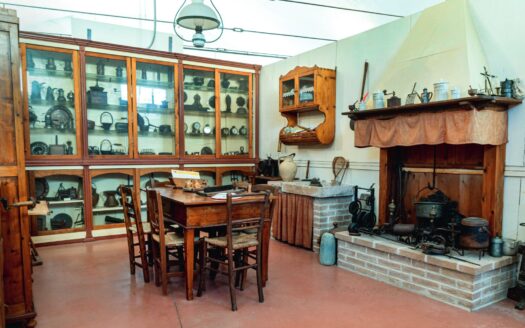
The Archaeological Museum of the Region has been set up in the basement of the Palazzo. This museum aims to recount the geographical, historical and cultural evolution of the Cesano Valley through five exhibition rooms spread over two floors, complete with informative panels rich in images.
Our journey begins in the most distant prehistory, when ammonites – ancient molluscs – inhabited the ocean where, millions of years later, land would emerge.
A land where unexpected animals such as the rhinoceros and the bison would later roam, and we can admire the enormous horned skull of the latter. Moving on, the display cases begin to reveal the unmistakable signs of human presence.
We study this evolution through artefacts that trace humanity’s various achievements in working with materials: flint objects are followed by those made of copper, bronze and iron, including fibulae, bracelets, fragments of weapons and numerous amphorae. Descending to the lower floor, we encounter a crucial phase in the history of San Lorenzo in Campo: the arrival of the Romans, attested to at the beginning of the 3rd century BC.
Among the vast number of artefacts, the many votive statuettes depicting female figures—probably linked to domestic worship—are particularly fascinating. Also of great interest is the boundary stone that once marked the border between the territories of what were then Pesaro and Suasa, the great Roman city just a stone’s throw from San Lorenzo. The final room marks a return to the museum’s very origins.
Here, in fact, is housed the collection assembled by Gello Giorgi, a doctor and monk who formed the original core of this museum. During his travels, Giorgi collected a diverse range of objects, varying in both period and origin. Particularly striking are the artefacts the monk brought back from his time in Sierra Leone, where he served as a missionary for many years; these allow us to delve into African ethnology through some truly unique artefacts.