
6 reasons to visit
Monte Cerignone
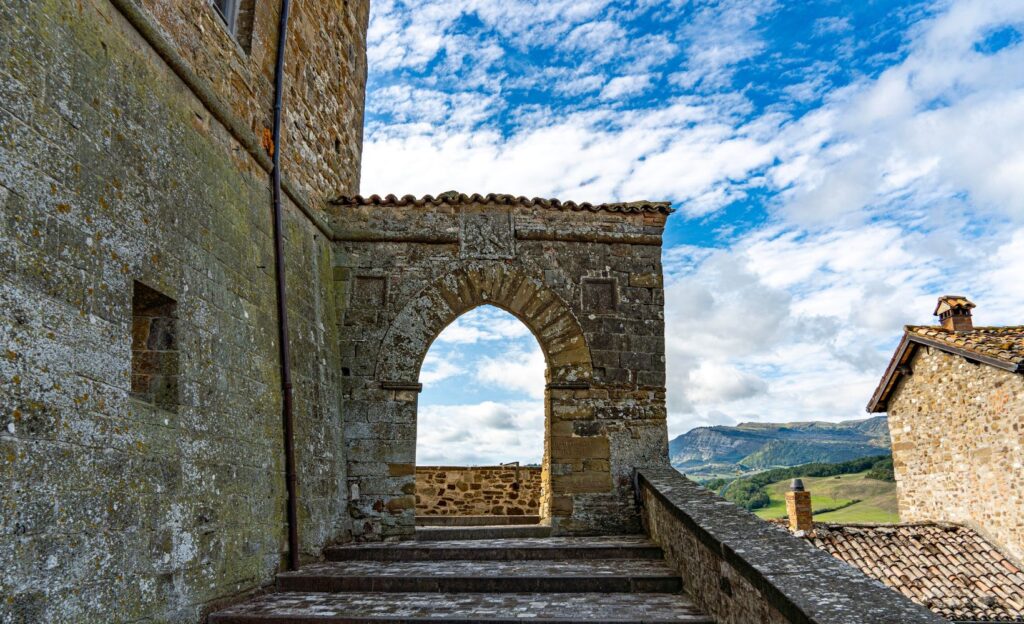
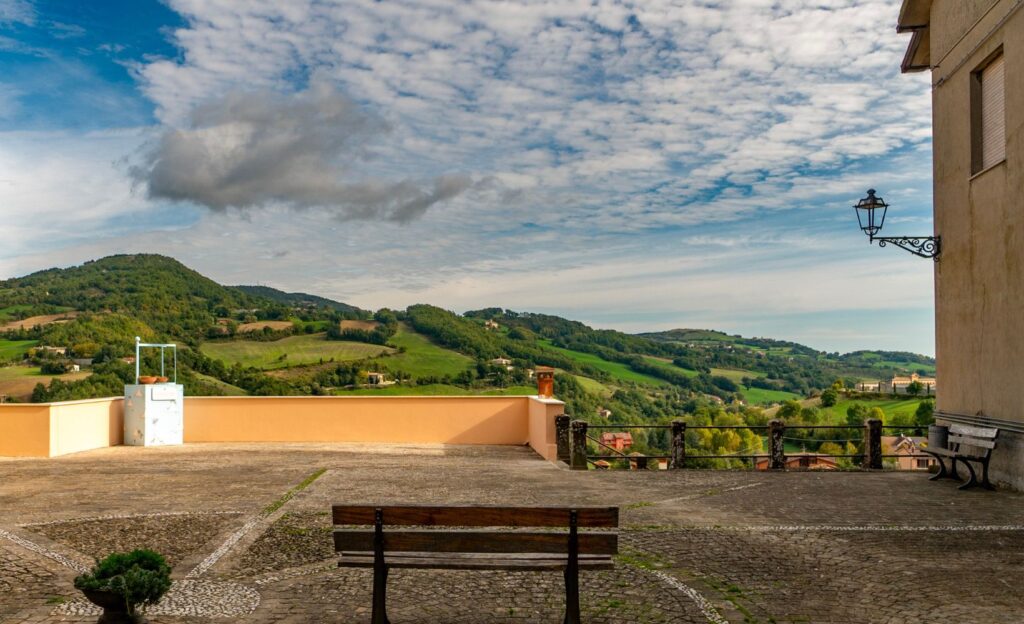
Perched on a rocky outcrop overlooking the Conca Valley, Monte Cerignone is a gem of rare beauty. Awarded the ‘Bandiera Trasparente’ for the quality of its environment, the village blends the austerity of stone with the green of the hills, reflecting the pride of a community that safeguards a heritage of inestimable value.
The village’s origins date back to Roman and pagan times. Extraordinary artefacts, such as the bronze head of Silenus and the remains of temples dedicated to Ceres, the goddess Lucina and the god Janus, bear witness to this place’s central role as a crossroads of ancient civilisations, from the Umbrians to the Romans.
The Rocca Feltresca, the village’s landmark, is a symbol of past glory that continues to fascinate scholars and visitors alike. In the Middle Ages, the Dukes of Urbino recognised its strategic value, officially naming it ‘Terra di Monte Cerignone’ and making it a military and administrative hub of the Montefeltro region.
The history of the village is intertwined with legendary figures such as Uguccione della Faggiola. This Ghibelline commander – a charismatic and powerful figure – has gone down in history as a possible inspiration for Dante’s ‘Veltro’, lending Monte Cerignone an aura of literary mystery.
Monte Cerignone boasts a special connection with the Holy See. Pope Clement XIV, the pontiff famous for having suppressed the Society of Jesus in 1773, spent part of his childhood here. This chapter has left a significant mark on the town’s cultural identity and prestige.
The central figure in the town’s religious life is Blessed Domenico Spadafora, a reformer of the Dominican Order. His incorrupt body is enshrined in the Church of Santa Maria in Reclauso, a constant destination for pilgrimages that makes Monte Cerignone a centre of profound spirituality and faith in the heart of the Apennines.

Discover the beauty of Monte Cerignone
The Beauty Trail comes to life
Exploring the beating heart of the Marche has never been easier with Criluma Viaggi!
Romantic weekends, days spent immersed in nature or cultural tours: we’ve put together itineraries to suit all tastes and time constraints.
La Rocca Feltresca
A symbol and the charm of the history of the village
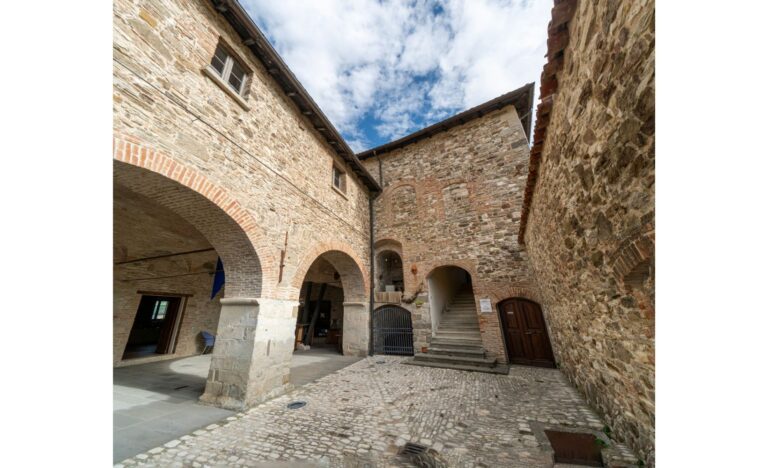
The Rocca di Monte Cerignone, situated at the highest point of the village, is a significant historical monument. Built by the Counts of Montefeltro and renovated in 1478 by Francesco di Giorgio Martini on behalf of Duke Federico of Urbino, it combines the defensive features of a fortress with the elegance of a stately home, marking the transition to Renaissance style. Originally featuring two main towers and imposing walls, the Rocca housed the Court and the Commissioner of Feretra, retaining its administrative importance even after losing its status as the region’s main centre to San Leo.
Features such as the Renaissance façade, the elegant windows and the carved Feltre eagle bear witness to the building’s artistic value, which has endured through the centuries as a symbol of the history and culture of the Montefeltro region. During the period when it served as a judicial centre, the Rocca housed a prison divided into two sections: the ‘carcere duro’ (high-security prison) for serious crimes, located in the basement, and the ‘carcere alla larga’ (open prison) for minor offences.
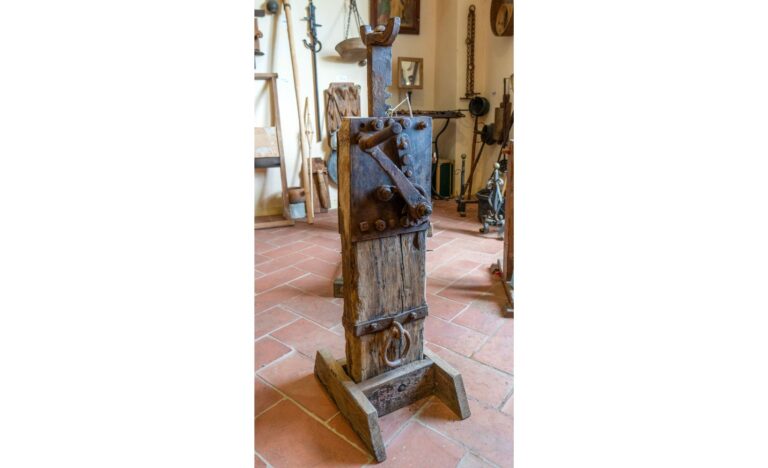
Justice, administered with rigour, involved the use of torture, although this was limited to the use of ropes. Monte Cerignone is also notable for its social institutions. The ‘Magazzeno dell’Abbondanza’, located in the Rocca, ensured the distribution of grain during famines, whilst the Hospital and the Monte di Pietà provided financial assistance, combating usury.
Fundamental to the town’s historical memory is the Archive, established in 1640 to preserve public and private documents. Reorganised by the Jesuit Father Natale Fabrini, it contains petitions signed by the Dukes of Urbino, trial records, autographs and parchments dating back to the 12th century. Among the oldest artefacts is an 11th-century fragment relating to Holy Mass, which makes the Archive a precious record of Monte Cerignone’s glorious past.
To round off this journey through time, the Museum of Rural Life, housed within the fortress itself, offers a glimpse into the region’s rural life. Through agricultural implements, craft tools and everyday objects, the museum recounts the work and traditions of rural communities, inextricably linking the village’s present to its historical and cultural heritage.
Beyond the Mystery of Uguccione della Foggiola
Medieval mysteries and famous figures
Monte Cerignone is a place where history and legend intertwine, evoking iconic figures such as Uguccione della Faggiola. His figure as a Ghibelline commander has been shrouded in centuries of debate and mystery. Among these is the hypothesis that he may be identified with the prophetic ‘Veltro’ mentioned by Dante in the Divine Comedy.
A further unsolved enigma concerns the location of his ancestral castle: was it at Monte Faggiola, near Monte Cerignone, or at Casteldelci? Historical documents, such as the Treaty of Rimini (1228) and the Diploma of Viterbo (962), seem to favour Monte Cerignone, where a majestic fortress once stood, a symbol of his family’s power.Although the castle no longer stands, the village honours Uguccione with a bronze bust facing Monte Faggiola, emphasising the unbreakable bond between the commander and his homeland.
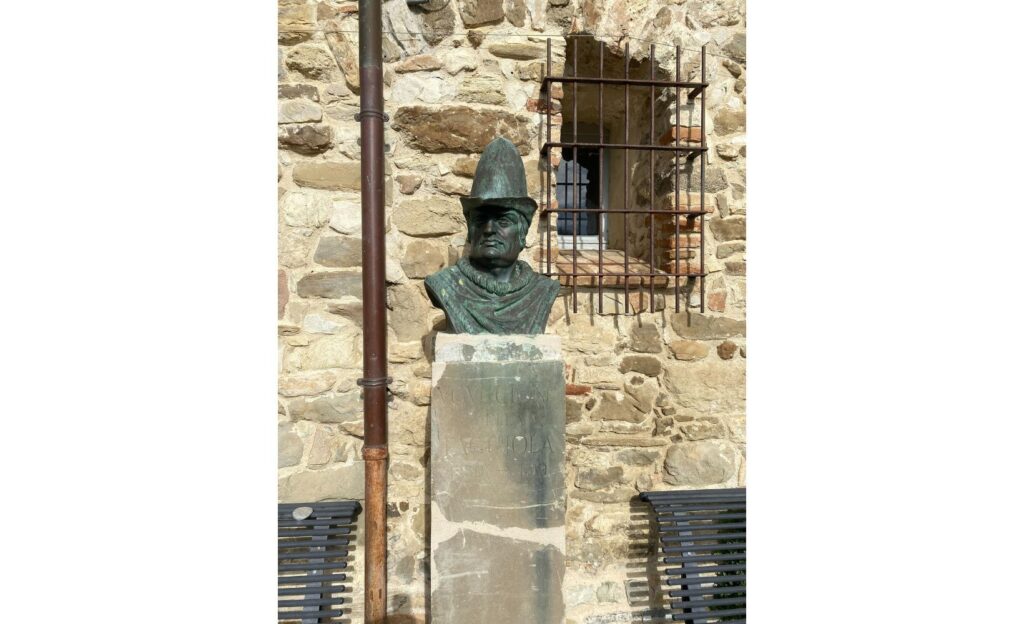
From a cultural perspective, a rare volume of the *Divine Comedy* dating from 1477, accompanied by glosses linking the Montefeltro family to the Carpegna family, was rediscovered in 1949 by the Jesuit Natale Fabrini, known as the ‘Dante of Monte Cerignone’. A symbol of erudition, this book represents a precious fragment of the link with the great poet. The figure of Pope Clement XIV, born Giovanni Vincenzo Ganganelli, is also linked to Monte Cerignone, the birthplace of his mother, Angela Serafina Mazza, a descendant of the noble De Tonsis family.
The village proudly celebrates this historical link through the Piazzetta Clementina and the memory of his mother’s birthplace, highlighting the importance of the civic and religious environment in the future Pope’s upbringing. Finally, the medieval atmosphere of Monte Cerignone, with the Rocca Feltresca and the Convent of Santa Maria delle Grazie, may well have inspired Umberto Eco to write his famous novel *The Name of the Rose*. Although there is no direct evidence, the village evokes the monastic atmosphere and the intrigues that characterise the novel, confirming itself as an inexhaustible source of imagination and charm. With its blend of history, mystery and culture, the village continues to enchant all who visit it.
The churches of the village
Testimonies of faith and history
The Church of Saint Catherine, built in the early 18th century in the Baroque style, stands as an elegant testament to an era in which faith and art blended in harmony. Originally dedicated to the Augustinian nuns, the church housed a fine choir screen in solid inlaid walnut, a symbol of the craftsmanship of the time. It once served as the chapel of the Sovereign Military Order of Malta, but today, having been deconsecrated, it is used as an exhibition space and theatre.
It retains the charm of its sandstone portal, a gem which, though marked by the passage of time, continues to evoke its glorious past.
In the heart of the village stands the Parish Church of San Biagio, a place of worship that embodies the solemnity and beauty of the Empire style, which it acquired during the extension and restoration works of 1840.
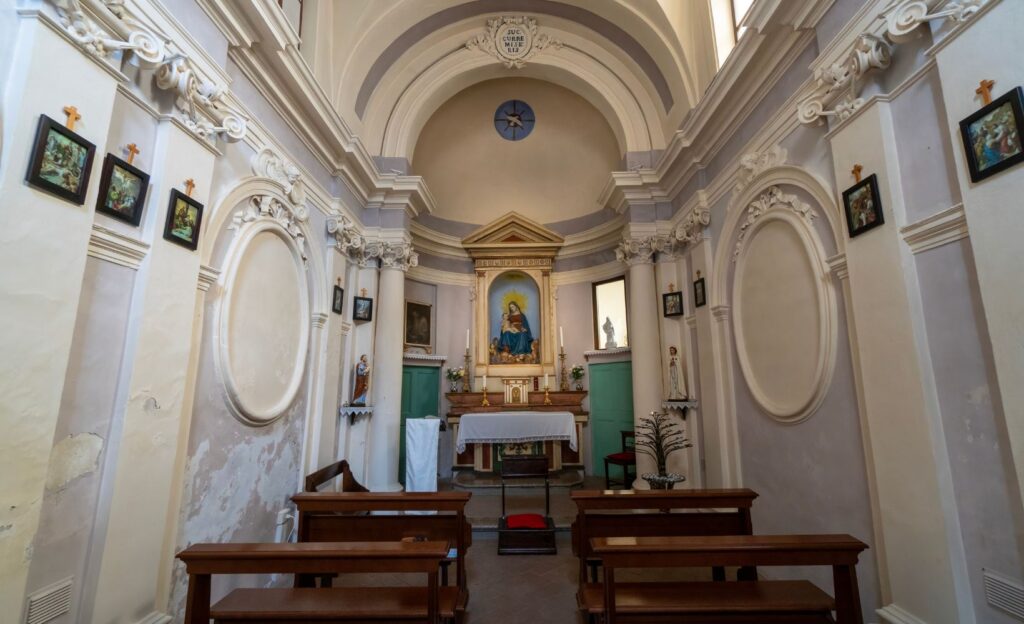
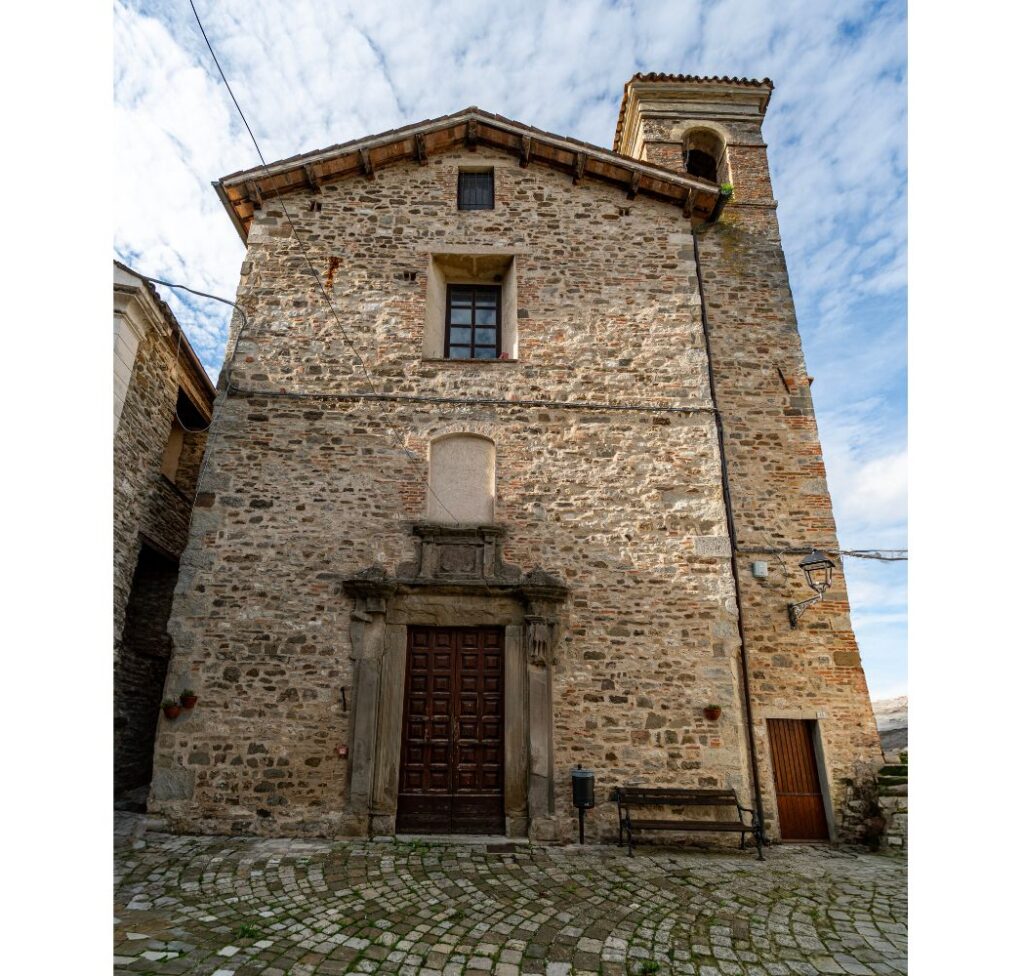
The single nave, spanned by four imposing columns, and the bell tower with its Ghibelline-style battlements are symbols of a historical legacy spanning centuries.
The church houses a priceless treasure: the relic of the Holy Cross, believed to be part of the cross of Christ, brought to the village by the Knights Templar. This sacred object, reminiscent of the Cross of Lorraine, imbues the village with an aura of sanctity, reinforcing its ties to the religious and cultural traditions of the Montefeltro region.
Finally, the Oratory of the Blessed Virgin of Perpetual Help, affectionately known as ‘La Madonnina’, adds a touch of intimacy to the village’s spiritual narrative. In the past, the proceeds from this small oratory supported education by funding the schoolmaster, a symbol of a strong sense of community. Inside, visitors can admire an 18th-century wooden statue of the Madonna and Child.
The figure of Blessed Domenico Spadafora
A life of faith and service in the Montefeltro region
For Monte Cerignone, Blessed Domenico Spadafora is not merely a religious figure, but a living symbol of faith, dedication and love for the community. His presence has left a profound mark on the village and the surrounding area, leaving a spiritual legacy that spans the centuries and continues to inspire to this day. A native of Randazzo in Sicily (1450–1521), Domenico belonged to the Dominican Order and chose to forsake the prospect of an academic or urban life to embrace the humble evangelical mission in the remote areas of Montefeltro.
In 1491, at the request of the local community and with papal approval, he arrived in Monte Cerignone, where he founded the Church and Convent of Fonte Buona. These became vital centres of spirituality, prayer and support for the local population. For thirty years, Domenico devoted himself to preaching and the formation of novices, embodying the Dominican charism of ‘contemplata aliis tradere’ (to pass on to others what one has contemplated).
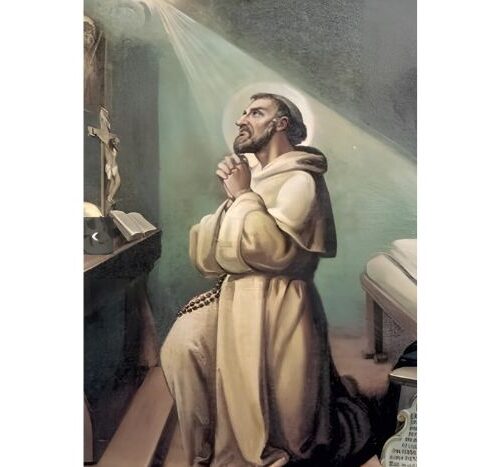
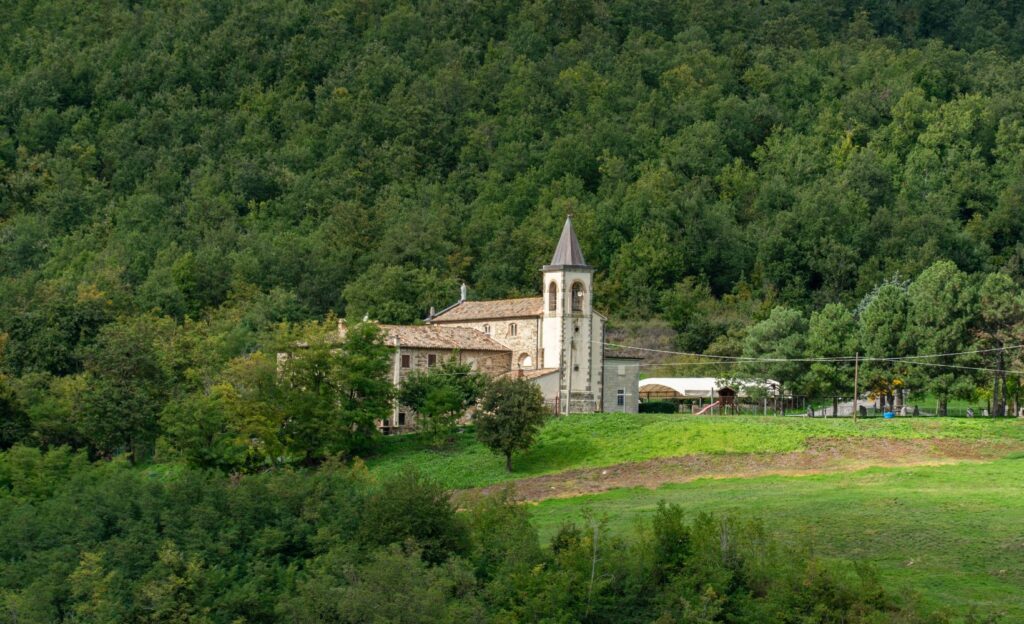
Through his example of charity and devotion, he transformed Monte Cerignone into a spiritual centre. His reputation for holiness grew whilst he was still alive, fuelled by miracles and healings attributed to his intercession, so much so that the locals affectionately called him ‘our saint’. After his death in 1521, his body was found to be incorrupt and to give off a sweet fragrance, further strengthening the popular veneration of him.His remains were initially laid to rest in the convent church and later transferred to the parish church of Santa Maria in Reclauso, which became a sanctuary attracting a constant stream of pilgrims.
Even today, the faithful come from far and wide to pray and seek graces through his intercession. In 1921, Pope Benedict XV officially recognised the cult of Blessed Domenico, raising him to the honours of the altars. His spiritual legacy, founded on contemplation, charity and evangelical action, continues to inspire the Church and the faithful. His memory is also commemorated by a monument created by the sculptor Canzio Bardozzi, which depicts him in prayer surrounded by allegorical scenes from his life.
From the Fountain of Priapus to the Anecdotes Trail
Between history, museums and natural beauty
Monte Cerignone tells its story through memory and landscape. Among the historical sites is the Fountain of Priapus, situated in the hamlet of Valle di Teva. Dedicated to the god of fertility and virility, this fountain has been renowned since ancient times for its purported healing properties and symbolic significance. Already famous in the 16th and 17th centuries, it evokes the region’s rural and spiritual roots, providing yet another reason to explore the surroundings of Monte Cerignone. Another iconic site is the watermill, situated in the hamlet known as Borgo.
Once the hub of the village’s economic life, the mill, powered by the River Conca, supplied energy to the craftsmen’s workshops and served as a meeting place for the community. Today, this symbol of the past forms an integral part of the ‘Path of Anecdotes’, a route that weaves together stories, sayings and aphorisms, bringing moments of everyday life back to life for those who pause to read. These include curious and significant episodes, such as the stories linked to the bust of Uguccione della Faggiola or the tales of the workshops in Borgo.
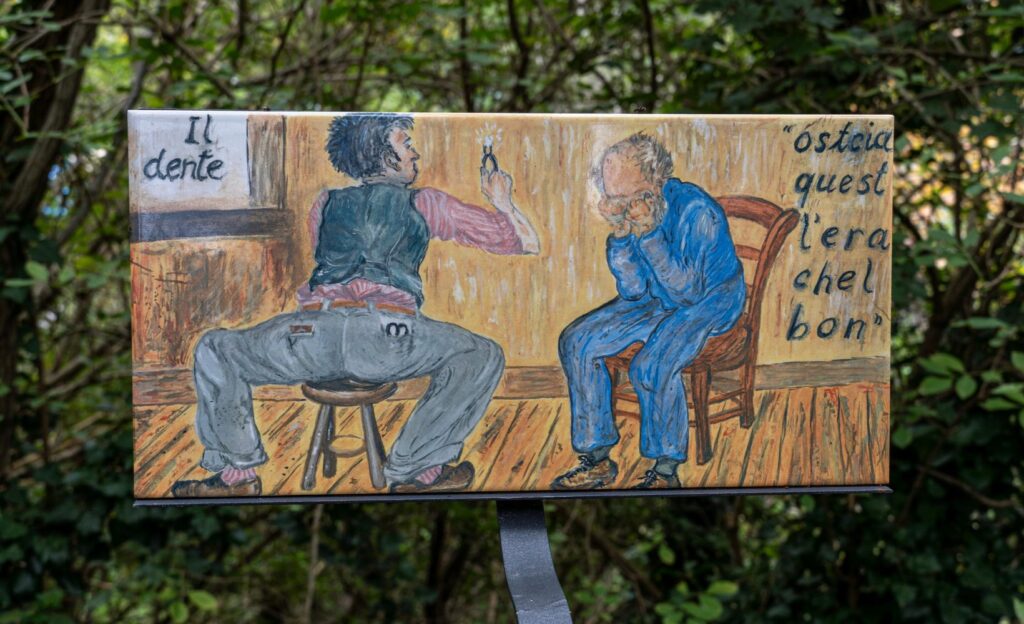
As you stroll through historic alleyways and scenic footpaths, the past blends with the natural beauty of the Montefeltro region, offering a unique experience that invites you to rediscover the community’s roots. Finally, amongst the cultural treasures of Monte Cerignone, the Giovanni Mochi Photography Museum stands out, housed in a room on the main floor of the fortress. This exhibition space houses a collection of precious vintage photographs, taken between the late 19th and early 20th centuries, which document the faces, landscapes and local traditions of days gone by.
Medieval flavours and ambience
From Pascucci’s café to craft beers at the Palio
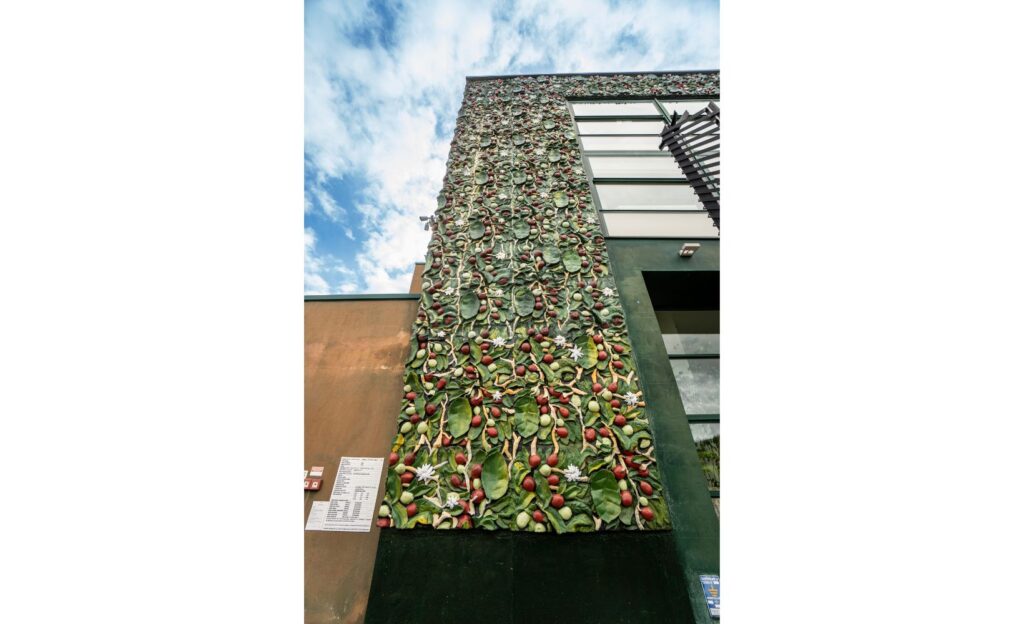
One of the region’s crowning glories is the Pascucci Coffee Roastery, founded in 1883 right here, amongst the rolling hills surrounding the village. This brand, a symbol of Italian excellence in the world of coffee, carries with it a legacy of passion and quality, deeply rooted in the local area and celebrated internationally. Savouring a cup of the famous Pascucci coffee thus becomes a ritual that takes you back to the origins of an iconic tradition.
Equally significant is Monte Cerignone’s inclusion in the regional project ‘Le Strade della Birra’, which celebrates the craft breweries of the Marche region. Among these, BAAM (Birrificio Agricolo Alto Montefeltro) stands out, inviting visitors to discover unique flavours and traditional techniques, making it an unmissable stop for beer lovers.
Nor should we forget the “Bustreng”, a traditional dessert based on an ancient recipe, celebrated every 15 August with a festival that dates back over a century.

Discover the beauty of Monte Cerignone
The Beauty Trail comes to life
Exploring the beating heart of the Marche region has never been easier. Criluma Viaggi is proud to bring to life the ‘Itinerario della Bellezza’ project by Confcommercio Marche Nord, transforming a guidebook of excellence into real itineraries, ready for you to experience.
Romantic weekends, days spent immersing yourself in nature or cultural tours: we’ve created itineraries to suit all tastes and time constraints. The Criluma experience is the added value that guarantees you first-class treatment, comprising continuous support, personalised attention and prompt responses.