

6 reasons to visit
Mombaroccio
Mombaroccio harbours a precious heritage within its walls: distinguished buildings, 14th-century churches that exude an aura of spirituality, and a recently restored 18th-century theatre. Its historic centre is a place where the memory of rural life and ancient crafts is brought to life in museums that stand as authentic testaments to art and civilisation.
The name of the village derives from the Latin ‘Mons Birotius’, meaning ‘the hill of the biroccio’. The biroccio was the characteristic two-wheeled cart used to travel along the most rugged roads, a symbol of a region that has managed to transform the complexity of its terrain into a strategic asset.
Situated at a historically crucial crossroads between Fano and Pesaro, Mombaroccio has been defended since the 13th century by a castle and imposing fortifications. This location made it a key stronghold in controlling the territorial dynamics of the Pesaro area.
Great figures have shaped the destiny of these streets: from the powerful Malatesta family, who built the city walls, to Guidobaldo del Monte. The latter, an eminent mathematician and astronomer associated with Galileo Galilei, bestowed upon the village a scientific prestige that still shines today in the history of European culture.
Mombaroccio’s glorious past is also reflected in the works of Ciro Pavisa, a renowned 20th-century painter. His works of sacred art, which can be found throughout the village, form a visual bridge between ancient devotion and modern sensibilities, enriching the local artistic heritage.
A visit to Mombaroccio is a journey for the senses: as you pass through Porta Maggiore and exit via Porta Marina, the view opens out onto an endless landscape. On clear days, the view stretches from Colle del Beato Sante all the way to Rimini, taking in the entire Adriatic coast as far as the silhouette of Monte Conero.

Discover the charms of Mombaroccio
The Beauty Trail comes to life
Exploring the beating heart of the Marche region has never been easier with Criluma Viaggi!
Romantic weekends, days spent immersed in nature or cultural tours: we’ve put together itineraries to suit all tastes and time constraints.
The historic centre, a treasure trove of architectural wonders
Strolling through the narrow streets of the village
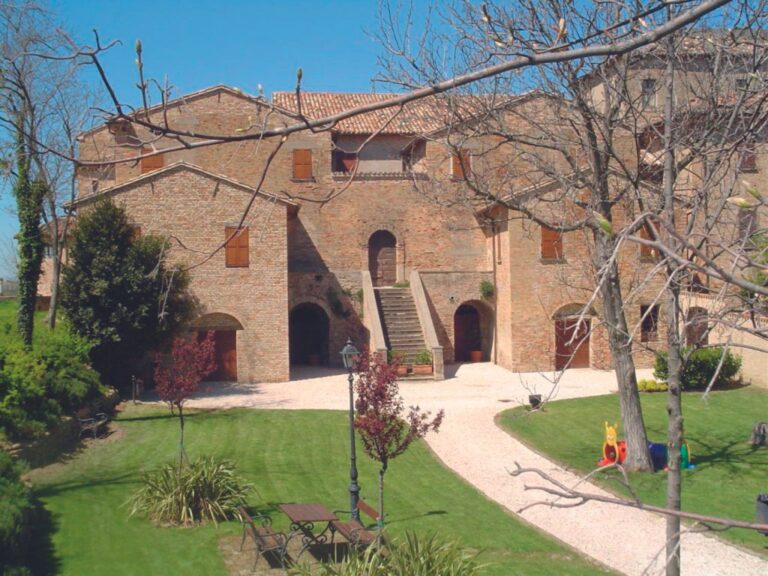
Once through the gates of Porta Maggiore, visitors are greeted by the medieval charm that emanates from every cobblestone in Via Guidobaldo del Monte, the main street running through the historic centre.
And there, standing out against the horizon, is the first stately home to welcome visitors: Palazzo del Monte, which dates back to the 16th century and was once the residence of the Marquises del Monte. What catches the eye is the vast and marvellous 1,600-square-metre garden, accessed via a side street and recently restored.
From here, the view is captivating, thanks to the extraordinary landscape, which can be admired from the raised city walls whilst walking along the rampart path that runs alongside them. Along Via Del Monte, the historic centre of Mombaroccio boasts other buildings of great artistic and architectural merit, such as the main church, dedicated to Saints Vito and Modesto, who are also the town’s patron saints.
It is the tallest and most imposing building in the village, built in the 14th century and notable not only for its distinctive size but also for its decorative friezes.
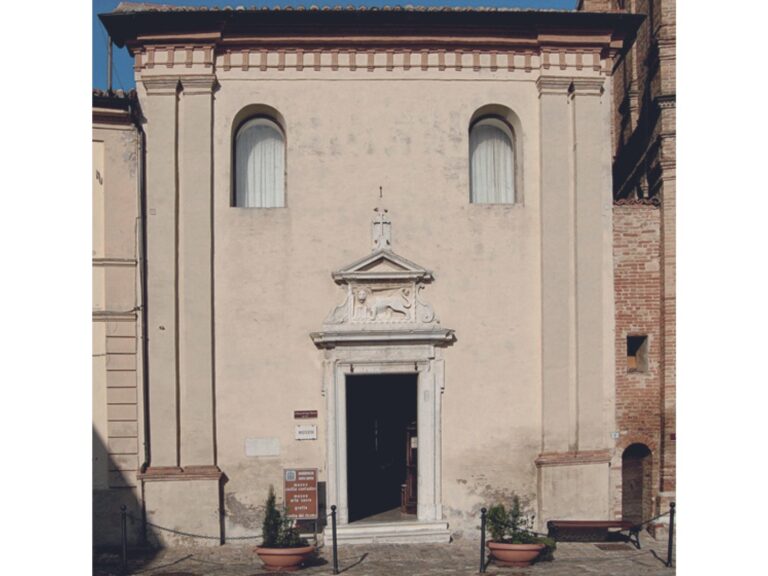
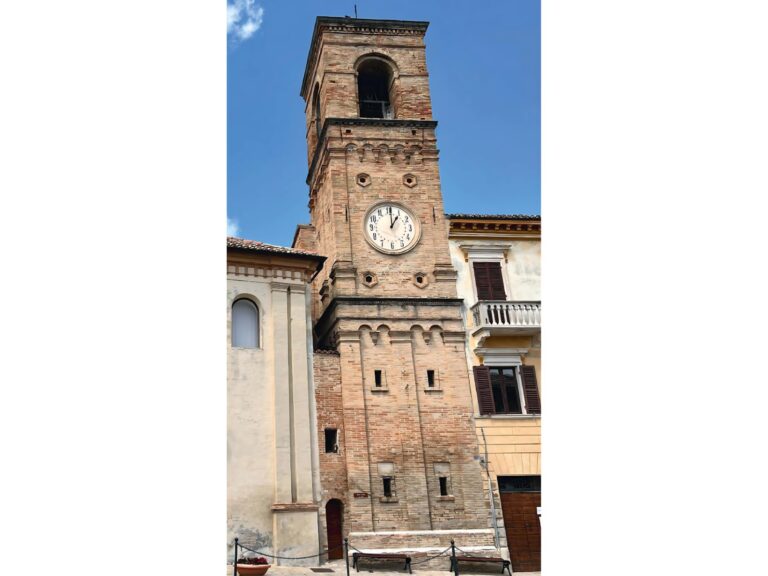
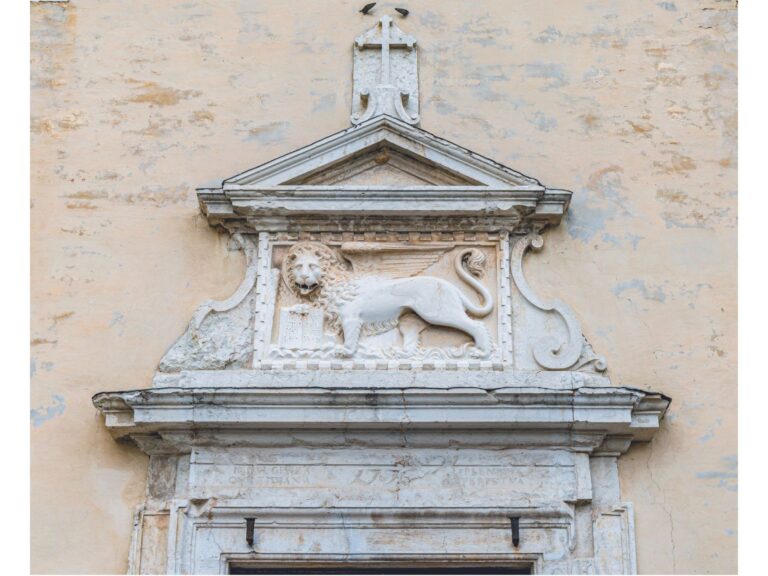
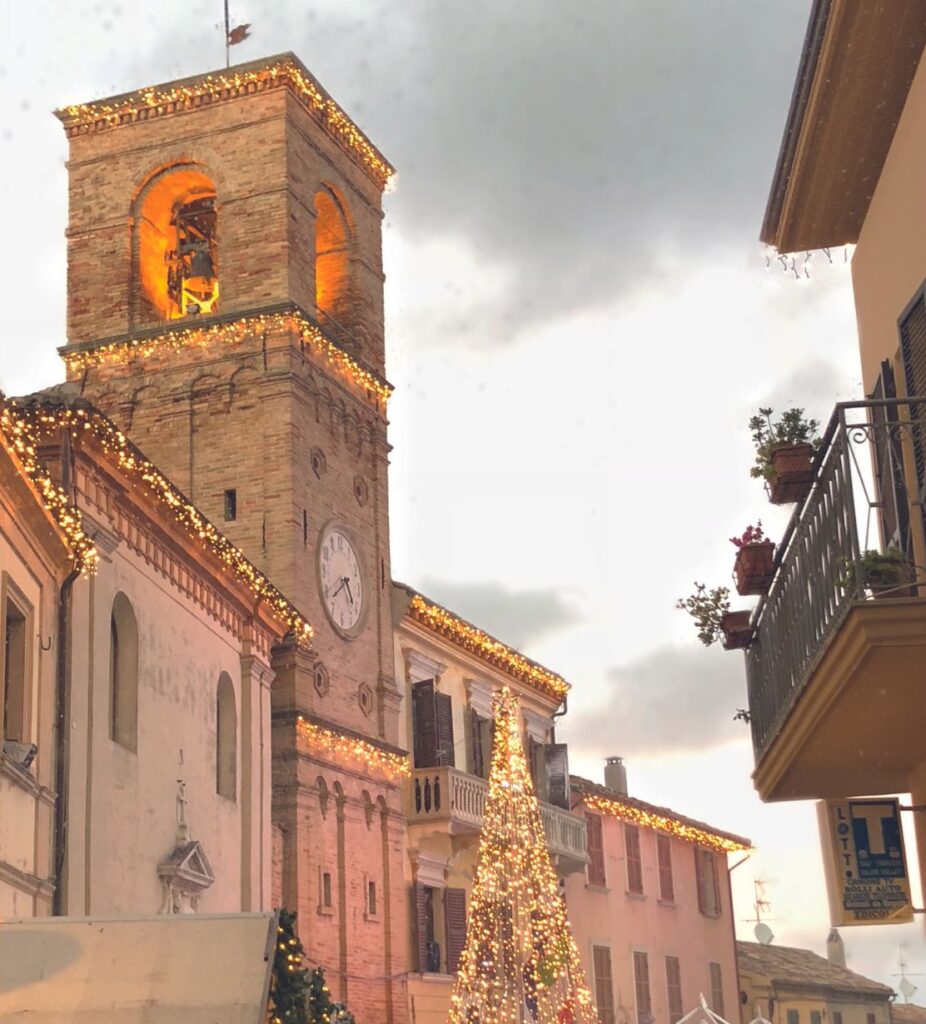
Via Del Monte leads into Piazza Barocci, where the 14th-century Town Hall stands; its side is dominated by the Civic Tower, erected between 1608 and 1609 by the Pesaro-born architect Guerrini. Next to it stands the Church of San Marco, founded in 1424, characterised by its external portal featuring a bas-relief in Istrian stone depicting the Lion of St Mark clutching the Gospel in its paw.
Adjacent to the church of San Marco is the cloister of the former convent of the Order of the Girolomini, now home to the municipal administration offices.
The historic centre of Mombaroccio offers a number of other cultural attractions, ranging from the Museum of Sacred Art, which houses priceless works dating back to the Baroque period, to the Museum of Rural Life.
Continuing along the promenade, you eventually reach Porta Marina, so named because it faces the sea.
Art, museums, history and spirituality in Mombaroccio
Hidden treasures bear witness to times gone by
Mombaroccio is a treasure trove of hidden gems that are well worth visiting and appreciating, as they are unique little gems, testaments to bygone eras. Of the original structure of the Church of San Marco – built in 1424 by Pier Francesco Rattoli using the profits from his business as a merchant in Venice, and subsequently completely renovated – all that remains today is the tympanum above the entrance portal, which features the Lion of St Mark.
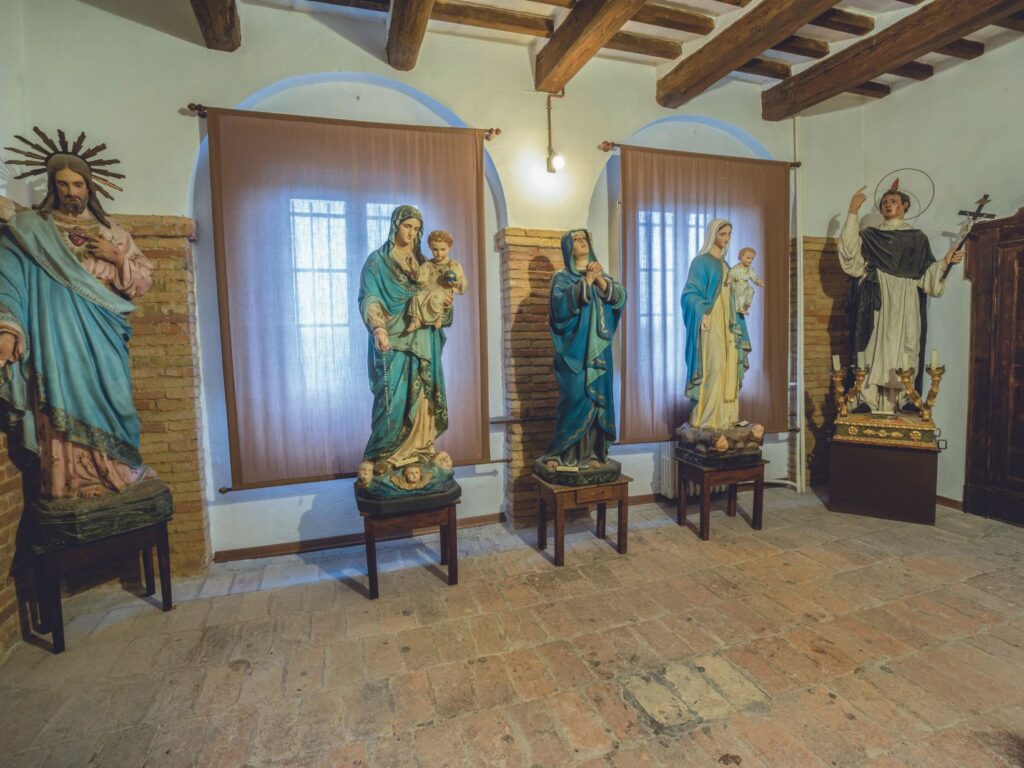
But what it conceals within the sacristy and in the rooms of the former Girolomini convent is no less significant: here, in fact, lies the Museum of Sacred Art of Mombaroccio, established in the 1980s thanks to the efforts of many volunteers who, with the support of the local Pro Loco, collected paintings, altarpieces, engravings, furniture, liturgical vestments, fabrics woven with gold and silver threads, and sacred objects dating from the 16th to the 19th centuries, which had been housed in churches scattered throughout the Mombaroccio area – a testament to the work of many artists who have remained anonymous.
The former Girolomini convent also harbours other treasures, in the tuff caves and the 17th-century cellars; here, in fact, stands a Museum of Rural Life, established in the 1980s thanks once again to the commitment and dedication of volunteers, coordinated by the exceptional passion of Varis Iacucci, a true son of Mobarocco who is committed to preserving and passing on the memory of these places through the ages.
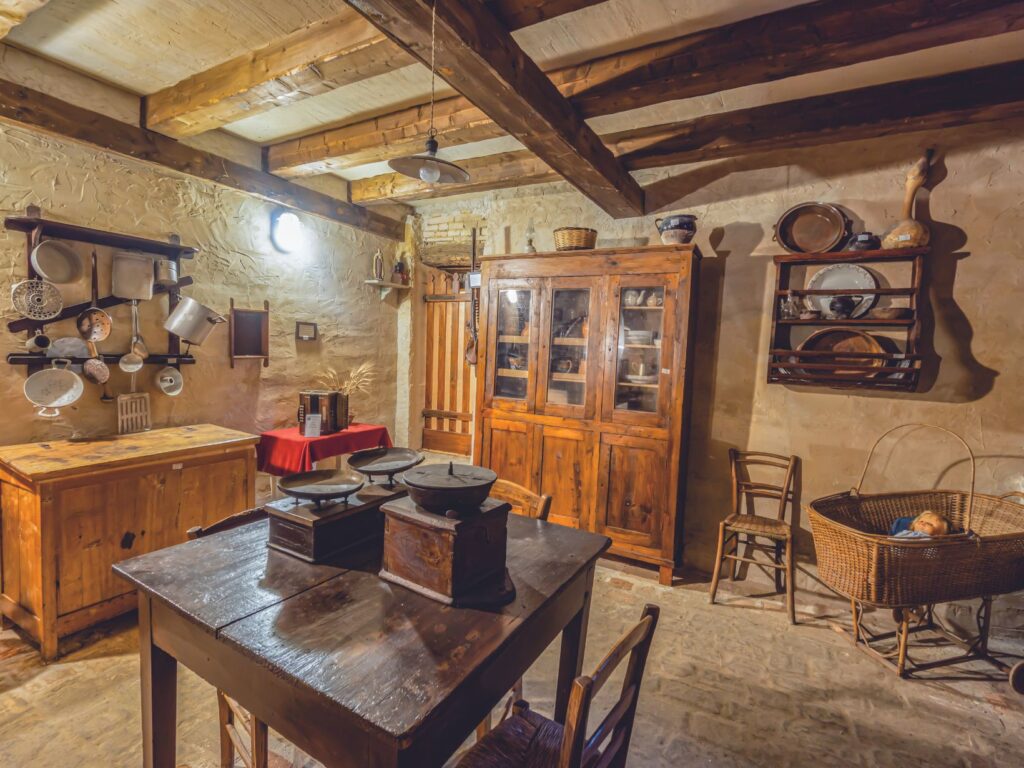
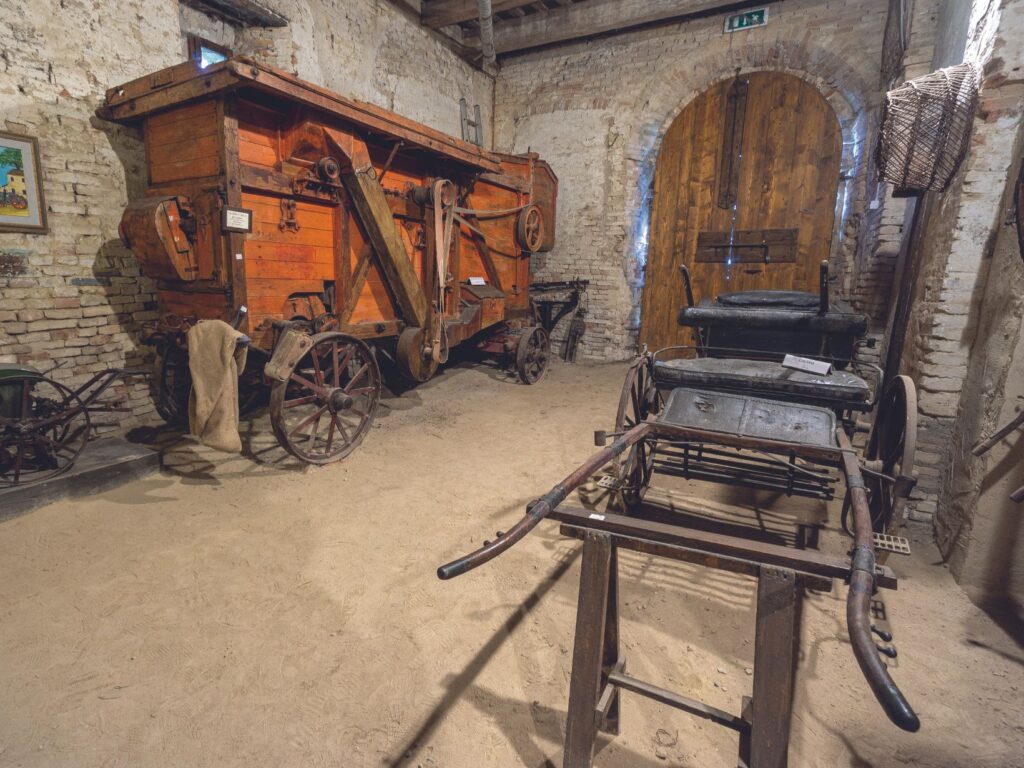
The museum houses tools and implements used in farming, crafts and domestic life, dating from the 18th, 19th and 20th centuries. The museum comprises twelve rooms, housing over a hundred items, including a sieve-type seed drill, a public set of scales, tools used by a cobbler, and even a period carriage.
Stepping through the door of this museum is like stepping back in time and reliving the daily life of farmers; indeed, rooms have been recreated to resemble the kitchen of a farmhouse, the icehouse, the cellar and the oil press room… as well as the workshops of blacksmiths and carpenters.
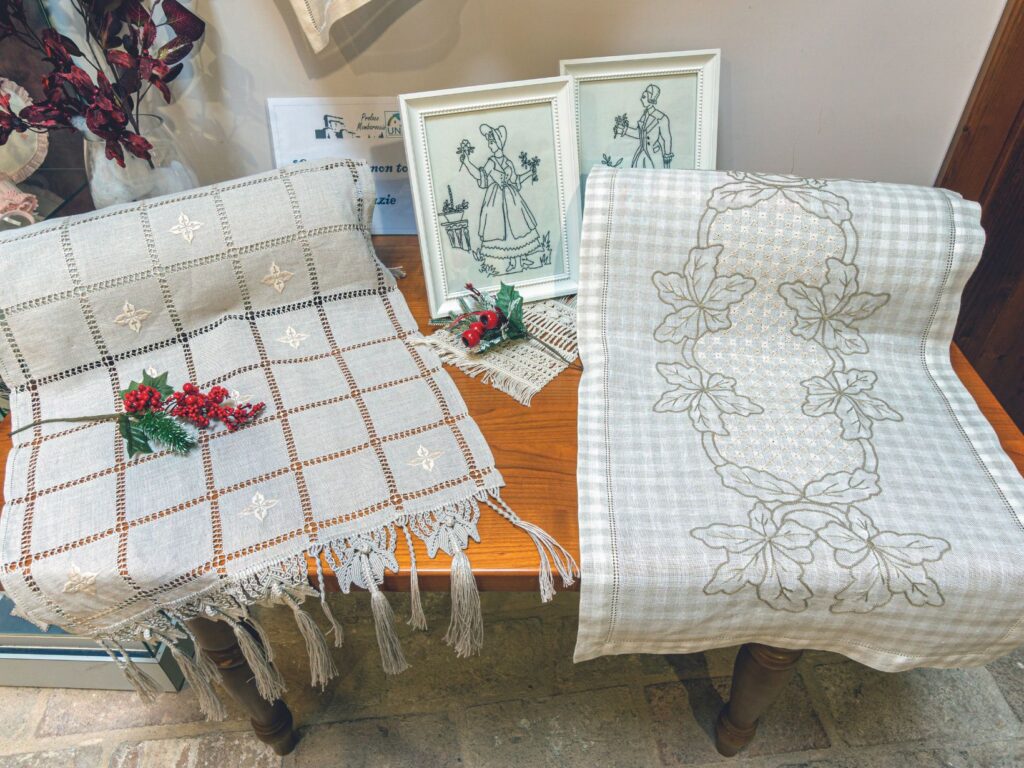
Finally, within the Civic Tower, we find the Embroidery Museum, which houses exquisite examples of traditional folk embroidery associated with the women of Mombaroccio. The oldest pieces date back to the 15th century, a period when the ‘legaccio’ technique was used.
There is still an embroidery school operating in the village today, and visitors who pop into the Gallery of the Tower can admire the results of its work.
Mombaroccio offers not only art and museums, but also performances: the Municipal Theatre, dating from the mid-18th century, has in fact recently been restored. Reopened in 2013, it is now a venue that blends modernity with a touch of nostalgia for times gone by.
Shrine of Blessed Sante
The three miracles of the winter cherries,
the wolf that became a lamb, and the acorns
bearing the sign of the cross
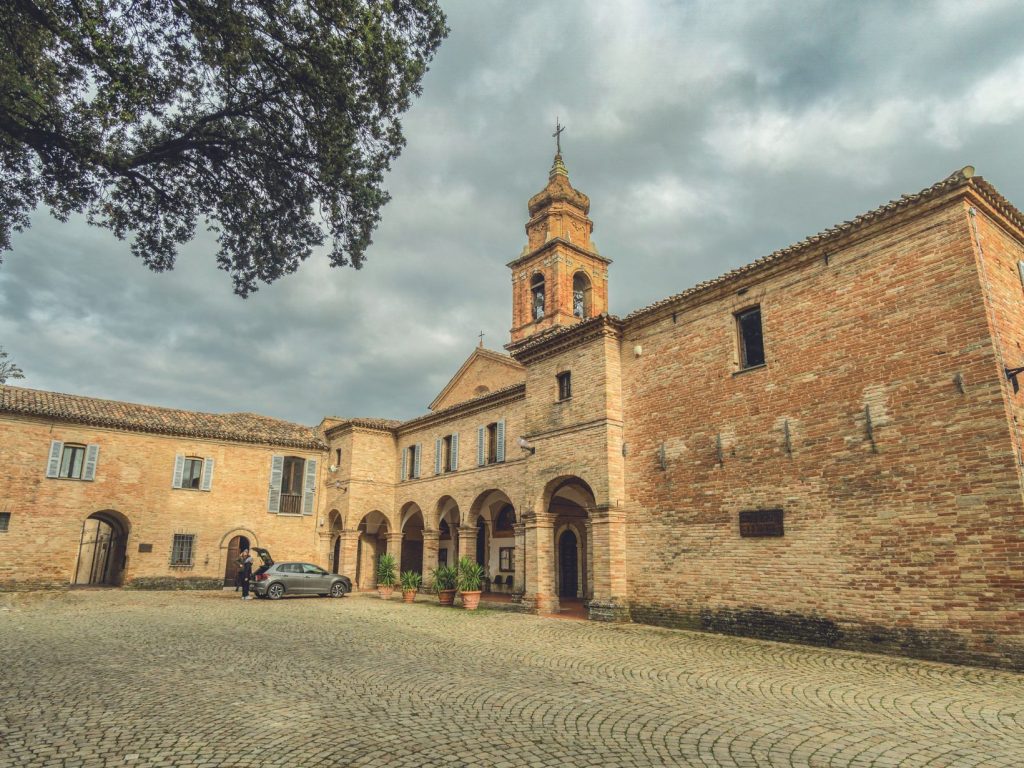
To reach the Shrine of the Blessed Sante, a few kilometres from the historic centre of Mombaroccio, you need to venture into the surrounding woodland and follow a path which, in the depths of autumn, presents a picturesque, fairy-tale scene, with a carpet of yellow, orange and brown leaves that crunch underfoot with every step.
The sanctuary was founded in 1223 by the Franciscan friars, who still look after it today. “The church and convent of Blessed Sante are a complex of great importance for the civil, religious and architectural history of the Marche region,” wrote Pope Nicholas IV in the 13th century, and today we can only confirm these words, for the Sanctuary is truly a major point of reference for the faithful, as well as being an artistic and cultural centre. The architectural complex is the result of seven centuries of alterations and a blend of different styles, which have made it unique and distinctive.
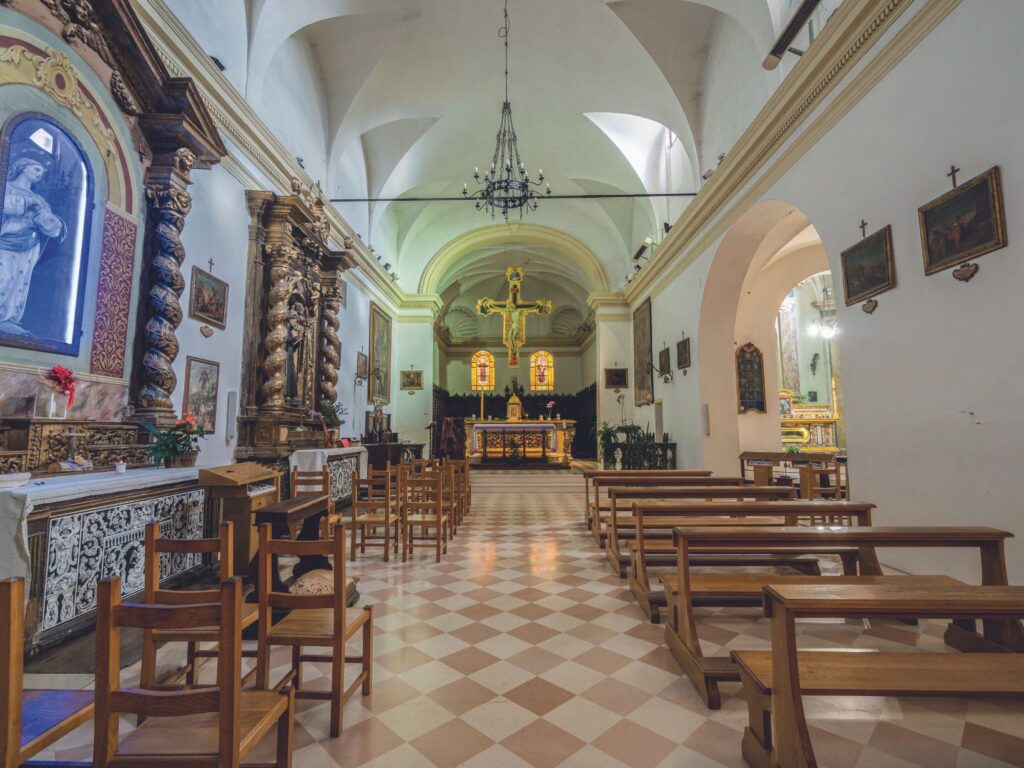
The east side features the traditional architectural design that frames the main nave, above which rises the majestic and distinctive bell tower, with its white stone capitals.
The stone portico of Sant’Ippolito, the magnificent 14th-century larch wood door, and the carvings beneath the portico paint a picture of a truly unique architectural complex. The interior of the church houses the Chapel of the Blessed Sante, built in the 18th century, which holds the Blessed One’s mortal remains.
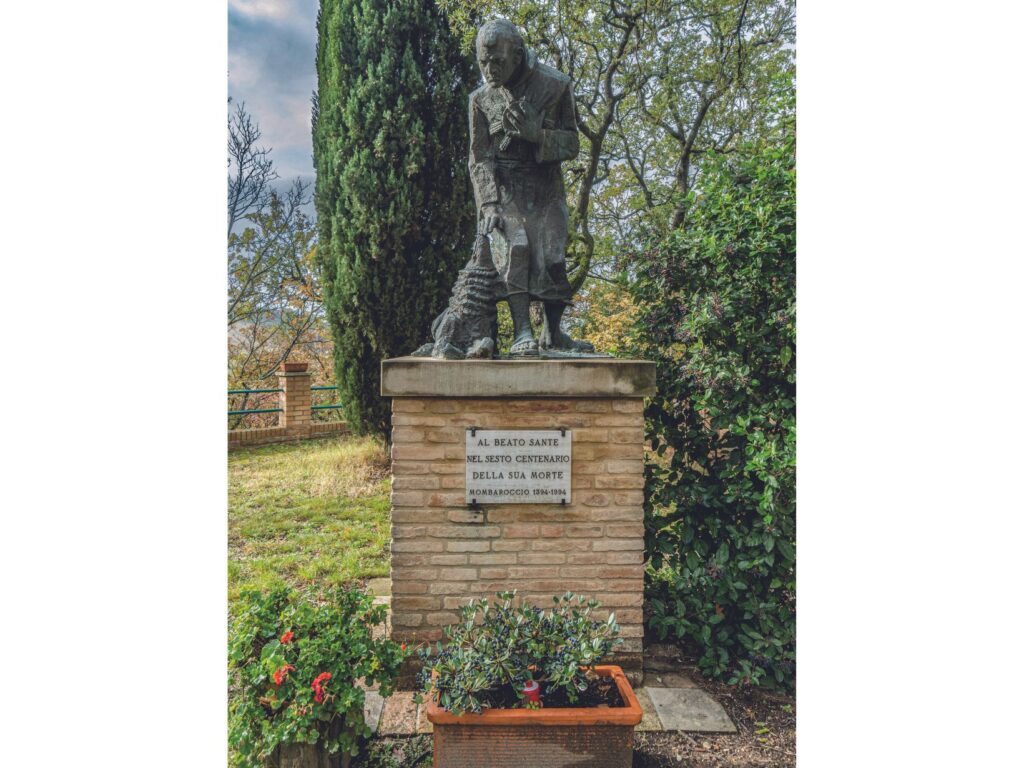
Here we also find a painting attributed to Favini and frescoes by Ciro Pavisa, such as the aforementioned ‘Miracle of the Cherries’. But what role is attributed to Blessed Sante, and what deeds made him so important to Mombaroccio?
Giansante Brancorsini: this was the name of the twenty-seven-year-old who, in 1370, knocked on the gates of the convent of the Church of Santa Maria di Scotaneto and asked the Father Guardian to take him into the convent as a sign of penance for a sin he had committed, the remorse for which had been tormenting him for a year: in self-defence, he had unintentionally struck dead a relative who, in a fit of madness, was about to kill him.

It is said that Blessed Sante was the protagonist of three remarkable episodes that led people to proclaim them miracles: after blessing it, he made a barren oak tree – which had been fruitless for years – bear fruit, producing an incredible quantity of acorns on which a small cross was engraved; he tamed a wild wolf he had encountered on his way back to the monastery, which was about to maul him; and finally, to the disbelief of all the friars living with him, in the dead of winter he managed to make the monastery’s cherry tree bear fruit.
Giudobaldo del Monte and Ciro Pavisa
A scientist and an artist on the streets of Mombaroccio
Two illustrious figures once walked the streets of the medieval village of Mombaroccio: Guidobaldo del Monte, who lived between 1545 and 1607, and Ciro Pavisa, born in 1890 and died in 1972.
The former was a nobleman, scientist, distinguished mathematician, physicist and astronomer; the latter an artist and painter. Guidobaldo del Monte was born into a prominent family that had risen to the nobility just one generation before his birth: it was in fact his father, Ranieri, who was awarded the title of Marquis del Monte thanks to his military achievements.
On Ranieri’s death, Guidobaldo inherited the title and began signing his name as ‘dal Monte’ rather than ‘del Monte’, in accordance with the custom of the time.
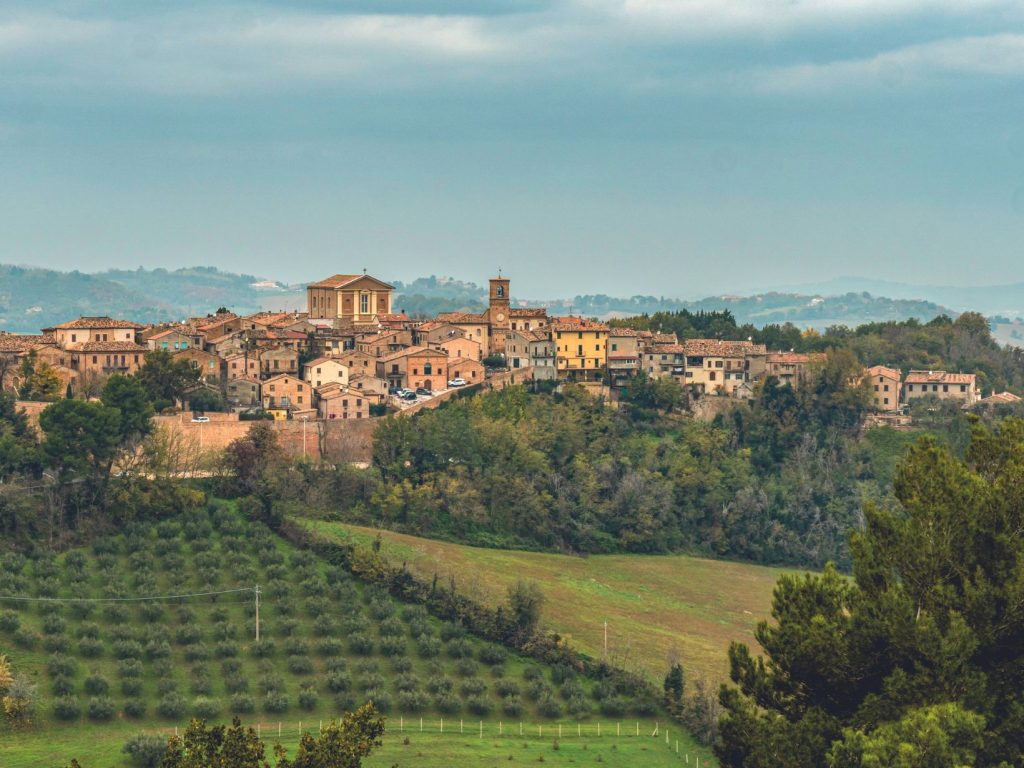
He also inherited a considerable fortune, so much so that he was granted the title of Count of Mombaroccio.
Guidobaldo devoted his entire life to science and mathematics; he studied at the University of Padua, although he probably did not obtain any degree, and it was there that he formed a close friendship with the poet Torquato Tasso, who dedicated the sonnet ‘Misurator di corpi celesti’ to Guidobaldo.
After serving in the military and fighting in Hungary, the Count retired to his estate in Mombaroccio, where he devoted himself entirely to scientific studies. His correspondence with Galileo Galilei is also renowned.
His most important work was *Liber Mechanicorum*, published in 1577, a text from which Galileo drew some important inspiration for his studies. The relationship between the two men will be one of the themes explored at a conference to be held in April 2023.
In what was perhaps a more turbulent era, marked by the horrors of the two world wars, Ciro Pavisa found himself carrying out his work; he was a man of a shy, reserved nature who expressed himself through his works.
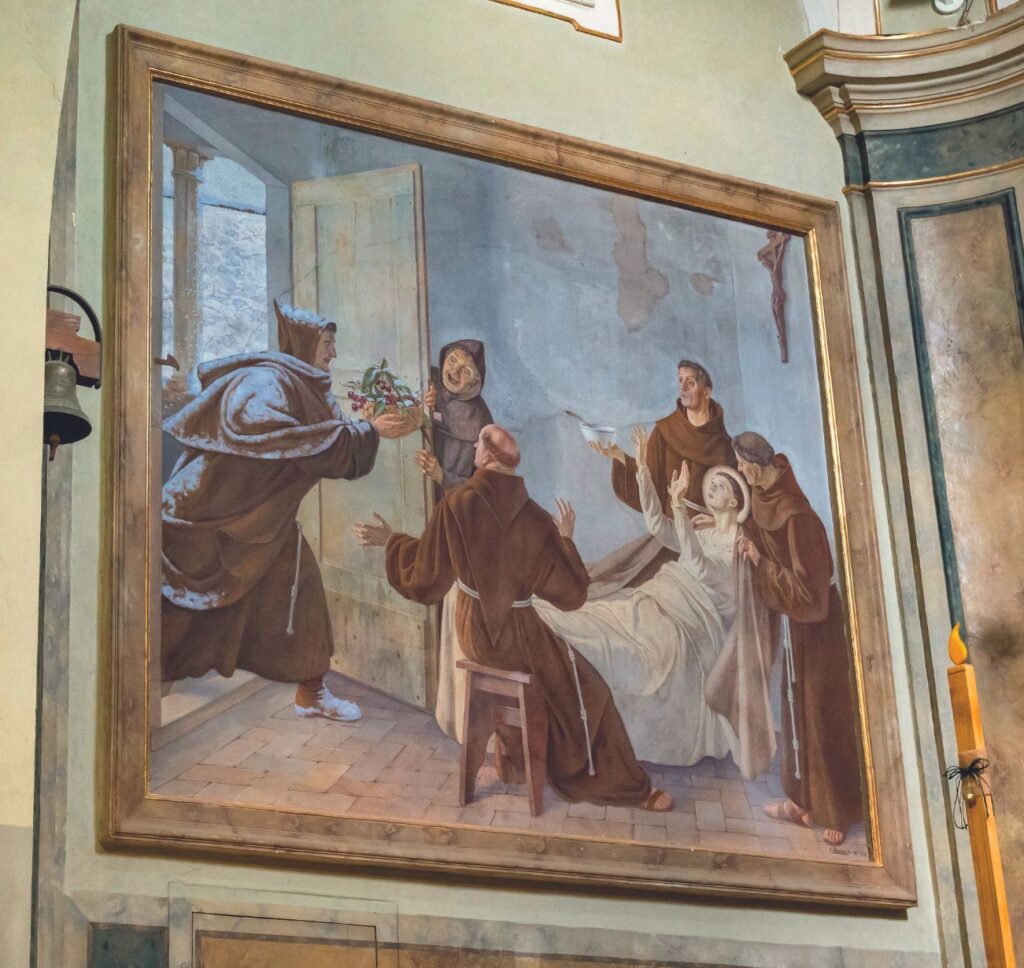
He made a name for himself whilst still a teenager: he painted the interior of the parish church of Santa Susanna in Villagrande di Mombaroccio using tempera. It was, in fact, the local council that funded Ciro’s studies at the Urbino School of Art, having recognised his artistic genius.
Ivana Baldassari said of him that he painted “because without painting he could not live; it would be like living without a heart, without the sun, without water”. Ciro Pavisa had two great passions: sacred subjects and ‘easel painting’; but it was in the former that he particularly distinguished himself.
At the Sanctuary of Beato Sante, to which he was deeply attached as his childhood home stood right next to it, he left one of his most important works: ‘The Miracle of the Winter Cherries’.
Nature in the woods of Mombaroccio: a treat for all the senses
Relaxation and magic at the spring and the shrine of the Madonna del Pontaccio
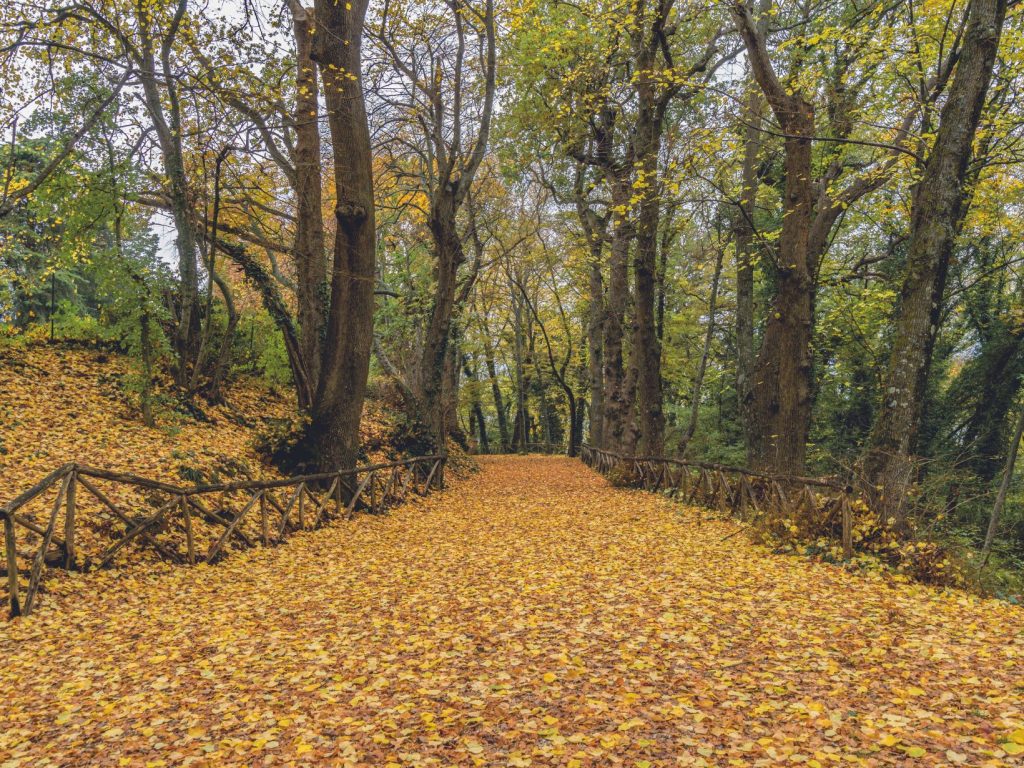
Mombaroccio offers breathtaking views, and in the countryside around the village you can experience nature in its wildest form. Walks or cycle rides through the woods, venturing deep into the thick vegetation, are one of the most authentic and magical ways to immerse yourself in nature and experience it first-hand.
Amidst the purple orchids peeking through the undergrowth, mushrooms and carpets of holly with their vibrant red berries that seem to whisper words of love, flowers and ferns brimming with life, their green leaves holding dewdrops that glisten like a shower of diamonds, you can hear the sounds of the pines, junipers and myrtles, ‘various instruments played by countless fingers’, as D’Annunzio would say, describing the typical woodland landscape in ‘La pioggia nel pineto’.
Every sense is captivated and stimulated in these places: the sense of smell is enchanted by the sweet, intense fragrance of broom during its flowering season through to July, and by the myriad aromatic herbs that thrive in the woodland; the sense of sight is enthralled by the colours of the clematis, the dog rose and the hawthorn, the red lily and cyclamen, lime trees and elms; the sense of touch as your fingers caress the smooth or rough trunks of the trees; and the sense of hearing, stimulated by the crunch of leaves underfoot and the creaks and sounds of nature.
Breathing in pure, clean air, far from the urban hustle and bustle, far from smog, traffic and the noise pollution of large city centres, enjoying the sacred silence that only an enchanted setting can offer: this is the defining feature of the Spring and Shrine of the Madonna del Pontaccio, a delightful spot offering fresh, pleasant and clean air, where the only sounds are the song of the birds and the rustling of the breeze through the trees.
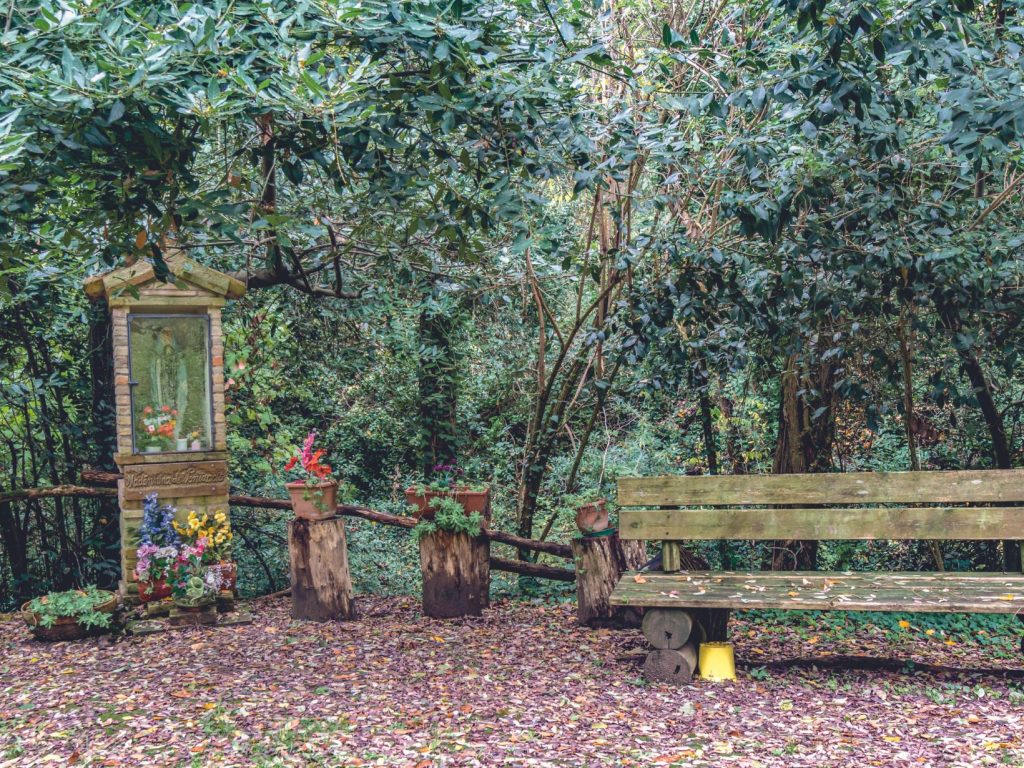
The recently restored spring fountain is in working order, and its low-mineral-content water is so sought-after that even people from neighbouring areas come here to bottle it. It is situated on Via del Pontaccio, in the hamlet of Villagrande, and is located next to a short stream, accessible via a path a few dozen metres long.
From the lavender festival
to the tagliatelle festival, with a look at the Christmas markets
Festivities for every season and to suit all tastes
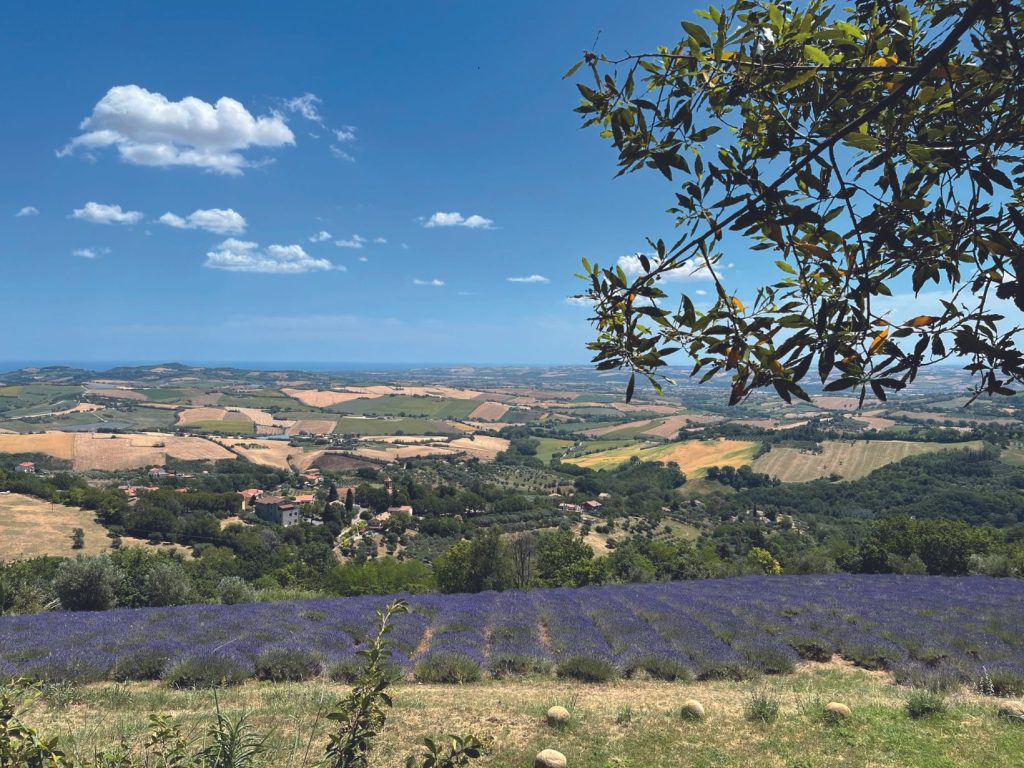
Mombaroccio offers a range of social occasions and traditional events, which attract many visitors every year. In summer, the village streets come alive, starting from the last weekend in June and continuing through to the first weekend in July, to coincide with the lavender bloom.
The backdrop to the event ‘Lavender in Bloom in Mombaroccio… and more!” is the Sanctuary of the Blessed Sante, which, for the occasion, is filled with the wonderfully fragrant, intense and enveloping scent of the purple flower, lending an air of freshness and delicacy thanks to its unique qualities. It is a truly immersive experience, allowing participants in the organised activities to soak up the atmosphere of the woodland and lavender fields, whilst also learning about the properties of medicinal herbs.
And then there are nature trails, local craft markets, yoga classes open to adults and children, horse rides and cycling tours. Food lovers simply must not miss the Tagliatella Festival, held in the hamlet of Cairo di Mombaroccio in August.
Handmade tagliatelle is specially prepared by volunteers from the Tagliatella Committee to satisfy the discerning palates of visitors.
The year draws to a close in style, amidst a magical Christmas atmosphere, with the Christmas markets, a destination for many enthusiasts from all over Italy. Music and traditions fill the narrow streets of the village, which is decked out for the occasion; stalls, craft exhibitors, local specialities and themed displays have been bringing the town centre to life for a full twenty-three years, ensuring that every visitor can experience that atmosphere full of charm and enchantment that only Christmas can offer.

Discover the charms of Mombaroccio
The Beauty Trail comes to life
Exploring the beating heart of the Marche region has never been easier. Criluma Viaggi is proud to bring to life Confcommercio Marche Nord’s ‘Itinerario della Bellezza’ project, transforming a guide to excellence into real-life itineraries, ready for you to experience.
Romantic weekends, days spent immersed in nature or cultural tours: we’ve created itineraries to suit all tastes and time constraints. The Criluma experience is the added value that guarantees you first-class treatment, comprising continuous support, personalised attention and immediate responses.