
6 reasons to visit
Fano
Fanum Fortunae, the Temple of Fortune. A place as mysterious as the capricious deity to whom it was dedicated, from whom Fano took its name and whose remains it still conceals…
…alongside the legendary Basilica that Vitruvius chose to build right here, a structure that defies the passage of time and continues to inspire research and arouse archaeological fascination.
The masks that populate the Carnival are also mysterious: concealed faces and phantasmagorical floats that parade during the days of a festival that has its deepest roots in Fano.
The sea facing the town is mysterious and fascinating; its boundless depths conceal riches that the fishermen of Fano know better than almost anyone else, having brought them up from the deep abyss to the surface.
Fano is a mysterious place, yet today it reveals itself in all its beauty, now that it is a modern, forward-thinking city, conscious of its heritage and constantly striving to showcase it.
A city committed to quality of life, with a particular focus on its youngest residents, for whom a project has been running for years – one that has made the city a national model, brimming with dedicated initiatives and infrastructure.

Discover the charms of Fano
The Beauty Trail comes to life
Exploring the beating heart of the Marche has never been easier with Criluma Viaggi!
Romantic weekends, days spent immersing yourself in nature or cultural tours: we’ve put together itineraries to suit all tastes and time constraints.
Roman Fano
The city of Vitruvius and Augustus
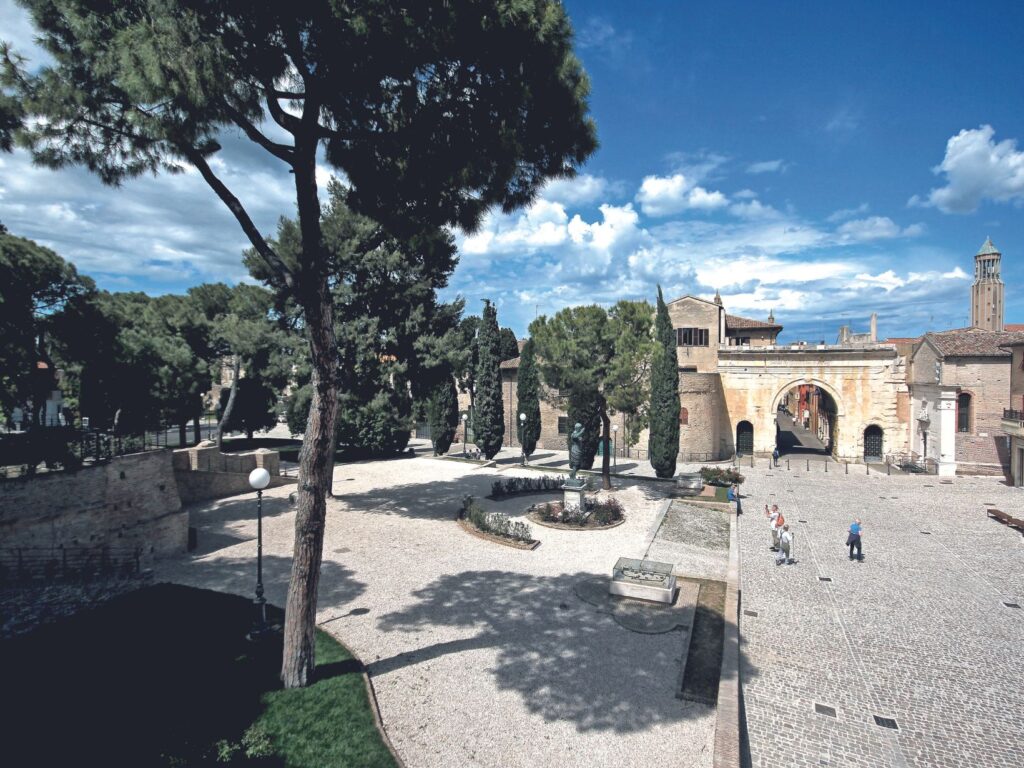
If you spend a day in Fano, by evening you’ll be surprised not to hear anyone around you speaking Latin. The town is, in fact, a treasure trove of Roman heritage with few equals. Fano was the terminus in the Adriatic region of the great Via Flaminia, which ran into the historic centre, connecting directly with the Decumanus Maximus via the Arch of Augustus, now the town’s symbol.
Commissioned by the Emperor in 9 AD as a gateway—a role it still fulfils today in all its grandeur—the Museum of the Via Flaminia has been established adjacent to it. Through digital and virtual displays, it allows visitors to explore in depth the city’s Roman heritage and that of the entire territory along the ancient Via Flaminia.
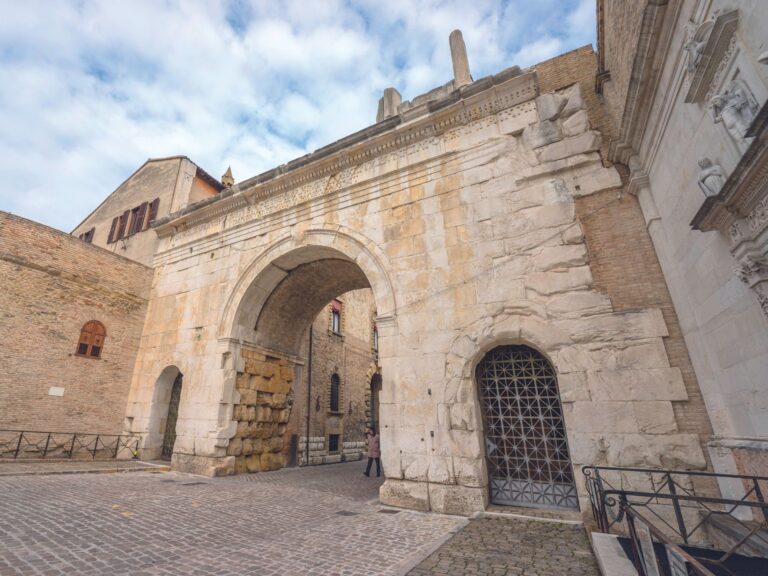
The imposing city walls extend from the Arch, where the Porta della Mandria is also situated – a secondary gateway built to improve the flow of urban traffic.
The construction of the walls complied with the technical specifications set out by Vitruvius in his treatise *De architectura*, dedicated to Augustus, which established its author as the undisputed master of this discipline.

The Basilica of Vitruvius
Vitruvius’s influence on Fano runs deep and is a source of pride for the town, which was home to the only building he himself claims to have designed and built: the Basilica of Fano, which has, sadly, been lost. The search for this legendary structure has captured the imagination of generations of archaeologists.
Today, in the Archaeological Site beneath the Church of Sant’Agostino, one can admire the excavated remains of imposing structures that have been alternately attributed either to Vitruvius’s Basilica or to the Temple of Fortuna, after which the city was named.
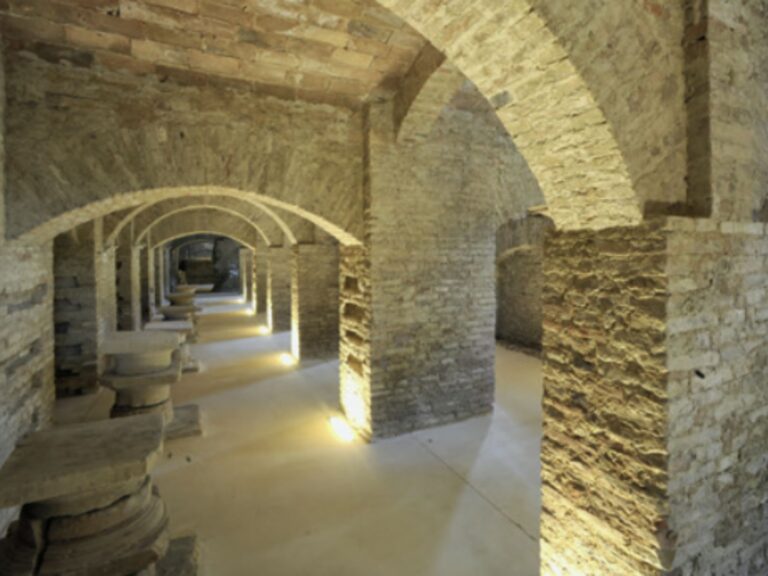
The vast array of archaeological finds is scattered throughout Fano, where every location is a potential treasure trove of new discoveries. There are various archaeological sites open to the public in the town, the most notable of which is the one at the Montanari Media Library; also not to be missed is the Archaeological Section of the Palazzo Malatestiano Museum, which is rich in artefacts bearing witness to the history of the area dating back to prehistoric times.
Fano, a seaside town
The beaches and the harbour:
a tradition that is being revitalised
The sound of the sea’s undertow pulses through the heart of coastal Fano. The town is inextricably linked to the Adriatic, which lies majestically before it.
The port lies at the heart of this connection, with its commercial and tourist activities, the heir to an ancient heritage that is still preserved in places untouched by the passage of time.
Walking along the Lisippo promenade, which stretches from Sassonia beach towards the Marina dei Cesari marina and features a replica of the statue by the Greek sculptor of the same name—rediscovered in these waters— one already catches a first glimpse of the uniqueness of the harbour setting on one side and the vastness of the sea on the other.
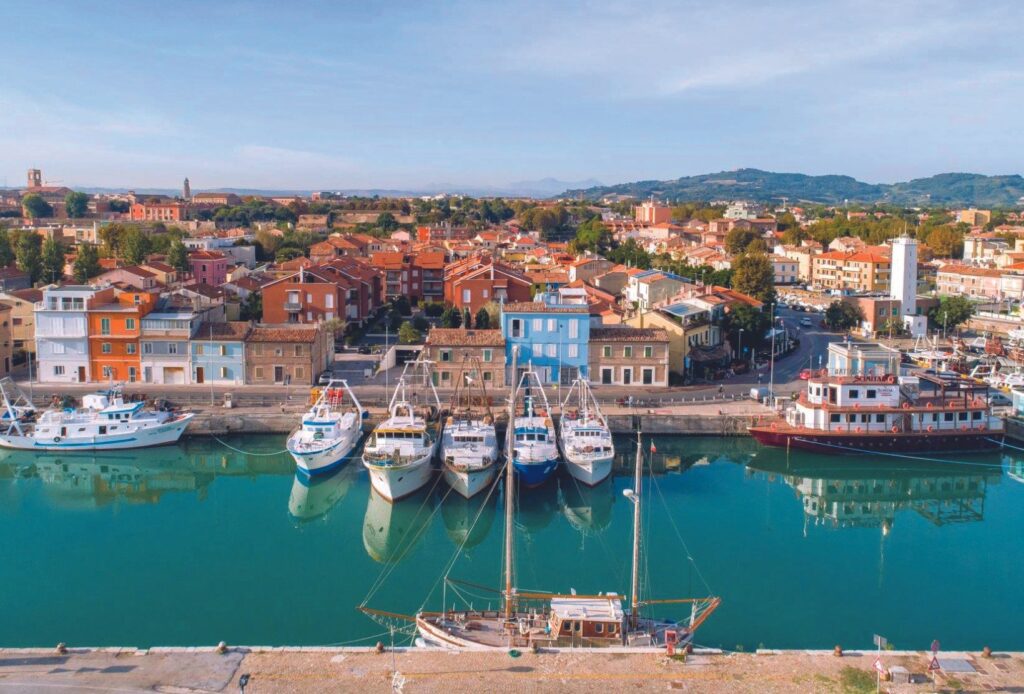
But it is whilst walking along the Molo dei Trabucchi, dotted with the stilts used by fishermen, or through ‘El Gugul’ – the neighbourhood that symbolises those fishermen – that one sets sail into Fano’s maritime history.
This place, which takes its name from a particular type of fishing net, is a street where everyone knows one another, where people are addressed and recognised solely by ironic nicknames, spoken in a cryptic local dialect accessible only to those who have understood it for generations.
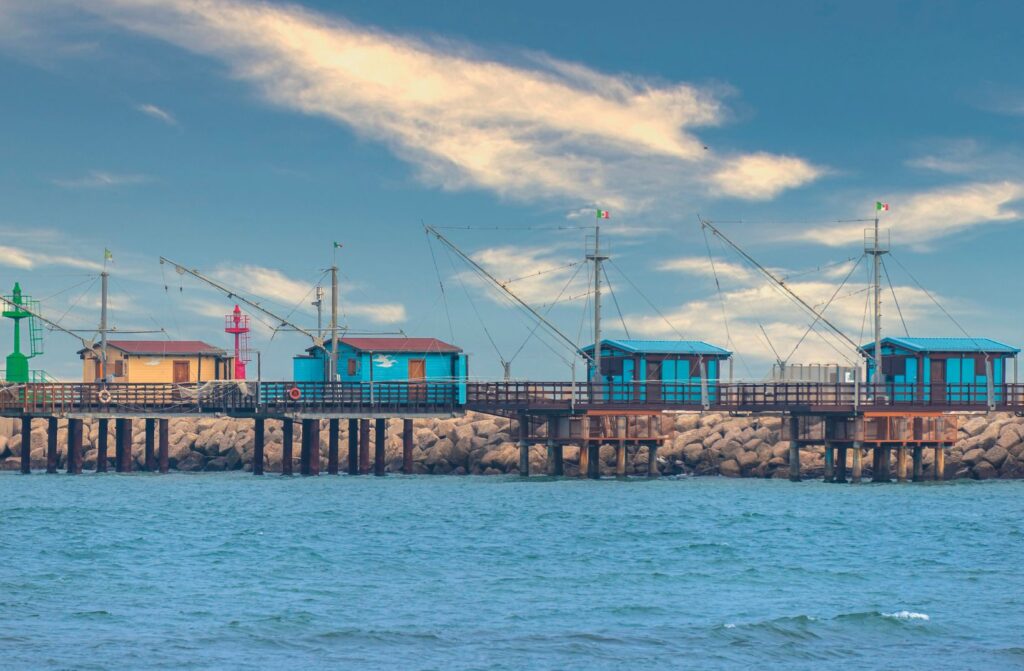
The fishermen who live here, and those who once lived here, would set out for days on end in search of fish to feed themselves and their families, embarking on Odyssean adventures that toughened both body and spirit, making them as sturdy as mooring ropes.
If you’re lucky, you can still hear these stories told over a glass of Moretta or along the quaysides, straight from the mouths of those who lived through them.
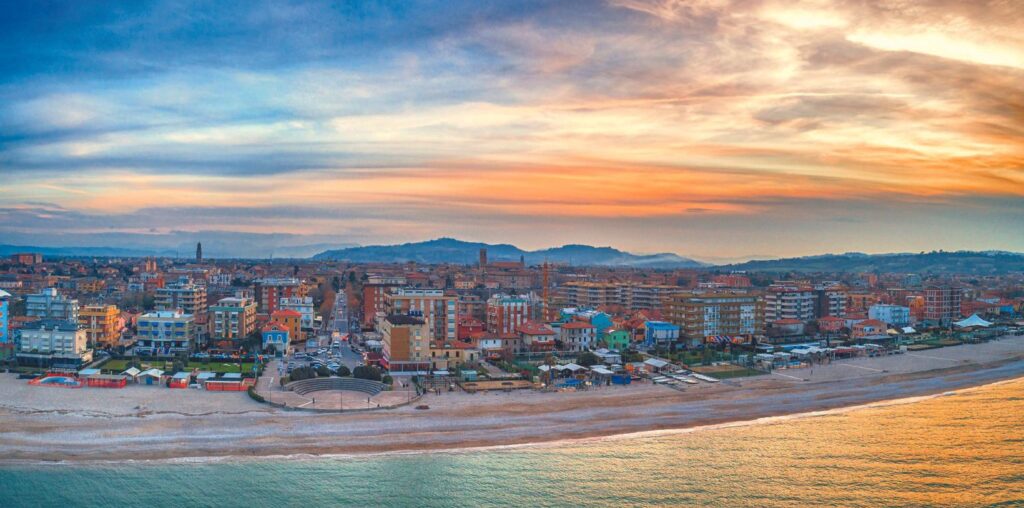
Today, that tradition endures in these places, alongside the progress that has run its course, transforming landscapes and customs.
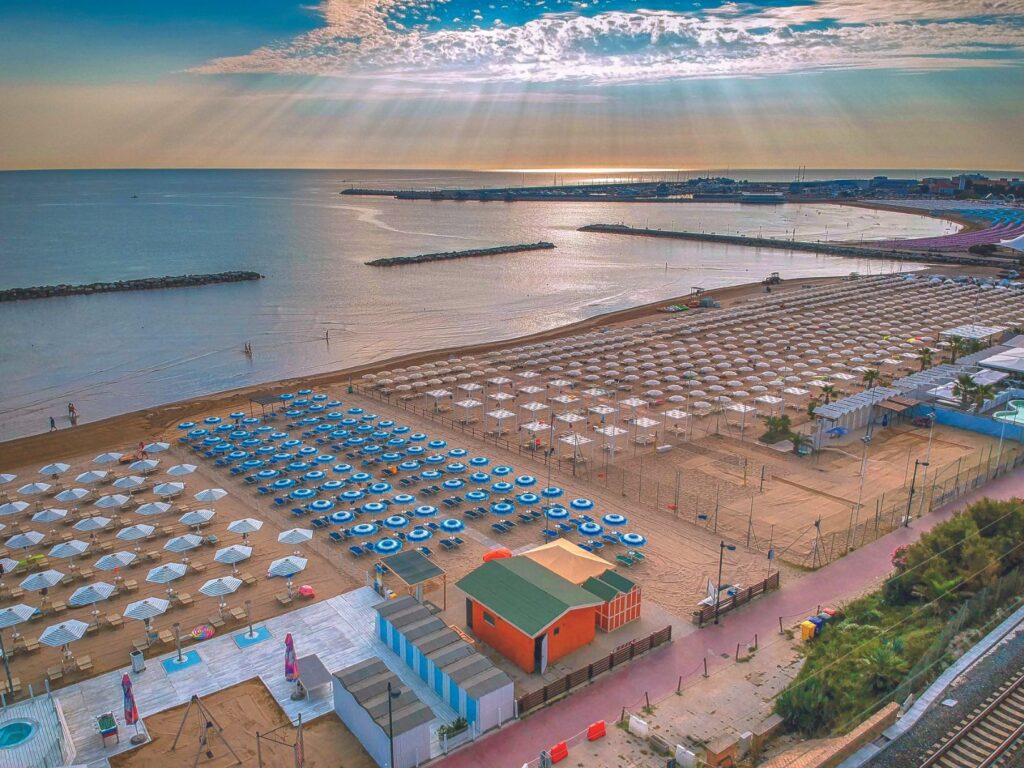
The beaches of Fano, which are a mix of sandy and pebbly shores, are synonymous with excellence: Blue and Green Flags and Legambiente’s ‘Vele’ certification attest to the quality of the water and the accessibility of the beaches in northern Fano, Torrette and Sassonia, which are child-friendly and feature plenty of other areas perfectly equipped for four-legged friends as well.
Places in books
Classicism and modernity in Fano’s libraries
Fano’s library system is two-faced, dual in both its premises and its nature, though intrinsically united. On the one hand, there is the Biblioteca Federiciana, established by Abbot Domenico Federici when he moved from Venice to Fano in 1681, bringing with him his monumental collection of 12,000 volumes.
The library was housed in the oratory of the church of San Pietro in Valle, adjacent to the palace and one of the finest Baroque churches in the Marche region.
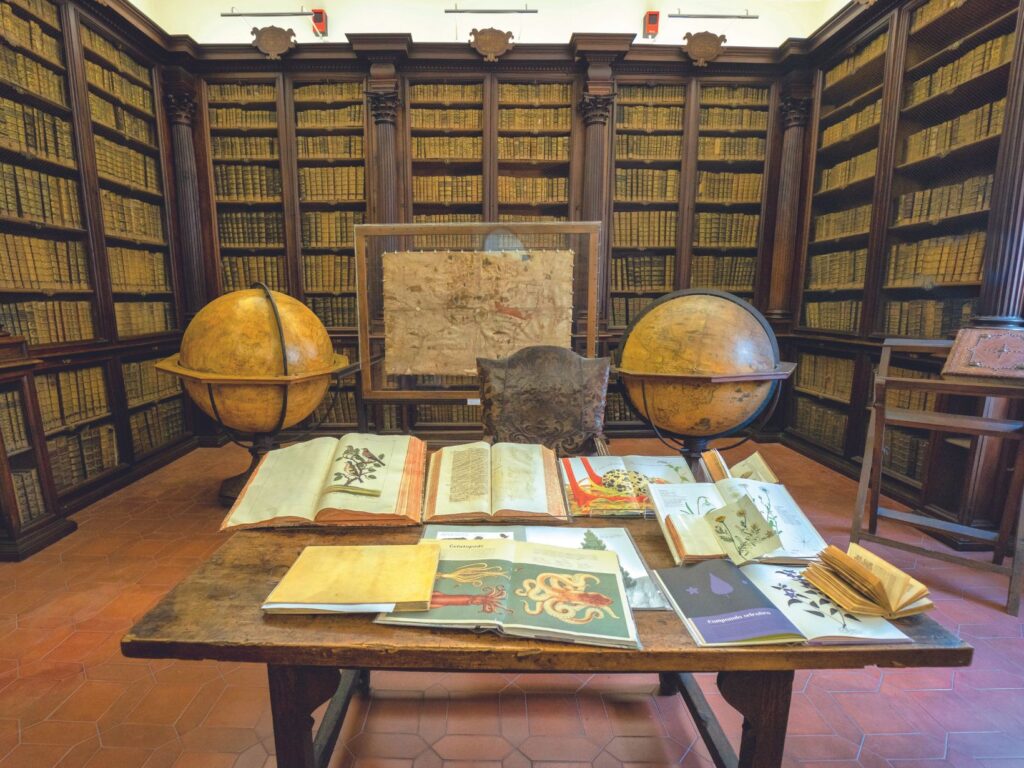
Of all the rooms in the Federiciana, the Sala dei Globi stands out for its splendour. The room takes its name from the two globes – one representing the Earth and the other the heavens – created by Vincenzo Coronelli, the historian and geographer commissioned by Federici to make them.
The globes are surrounded by tall bookcases housing part of Frederick’s original collection: French-bound volumes whose worn spines bear titles spanning every field of knowledge, still accessible today to anyone who wishes to discover their secrets by leafing through their pages.
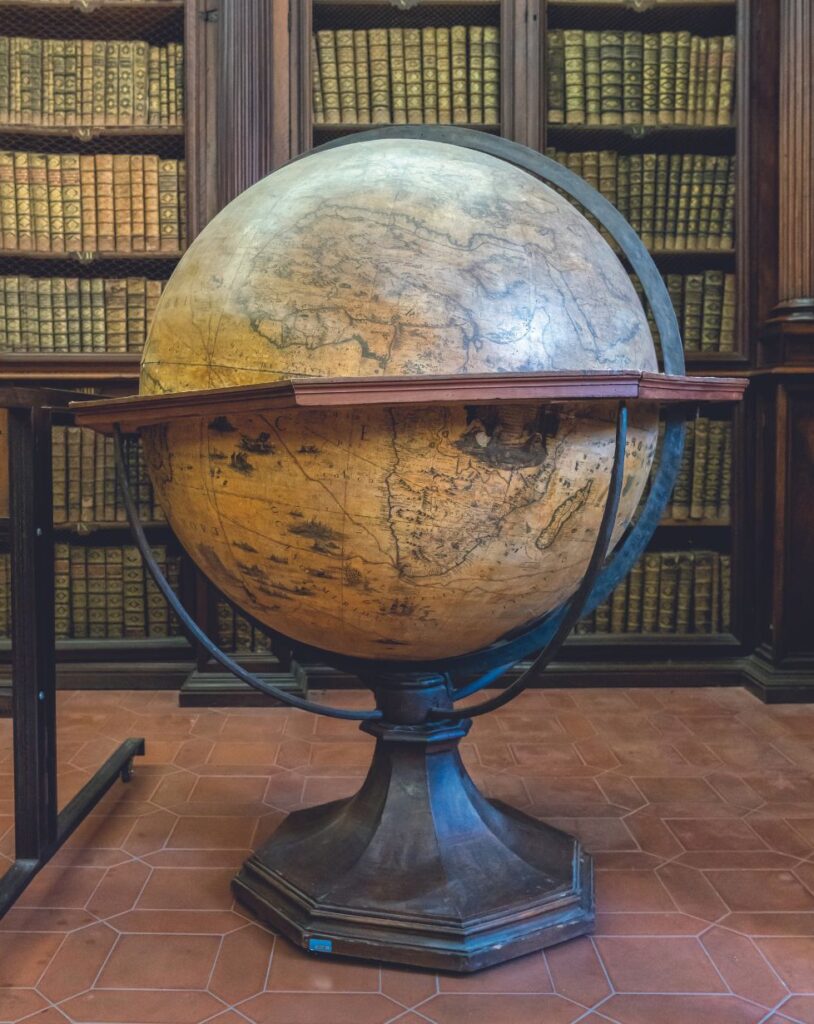
Montanari Media Library
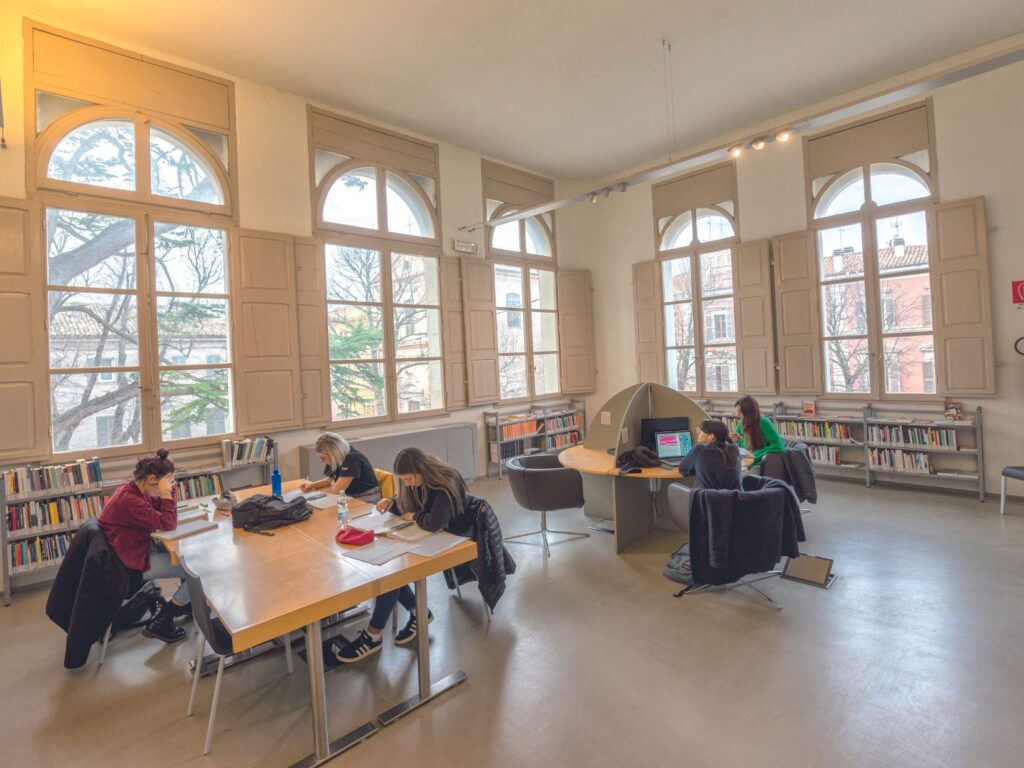
Alongside the Federiciana is the Montanari Media Library, a library characterised by its innovative spaces and services.
As well as offering traditional library services, the Memo serves as a hub for welcoming and bringing the local community together, defying any preconceptions about who can or should engage with culture.
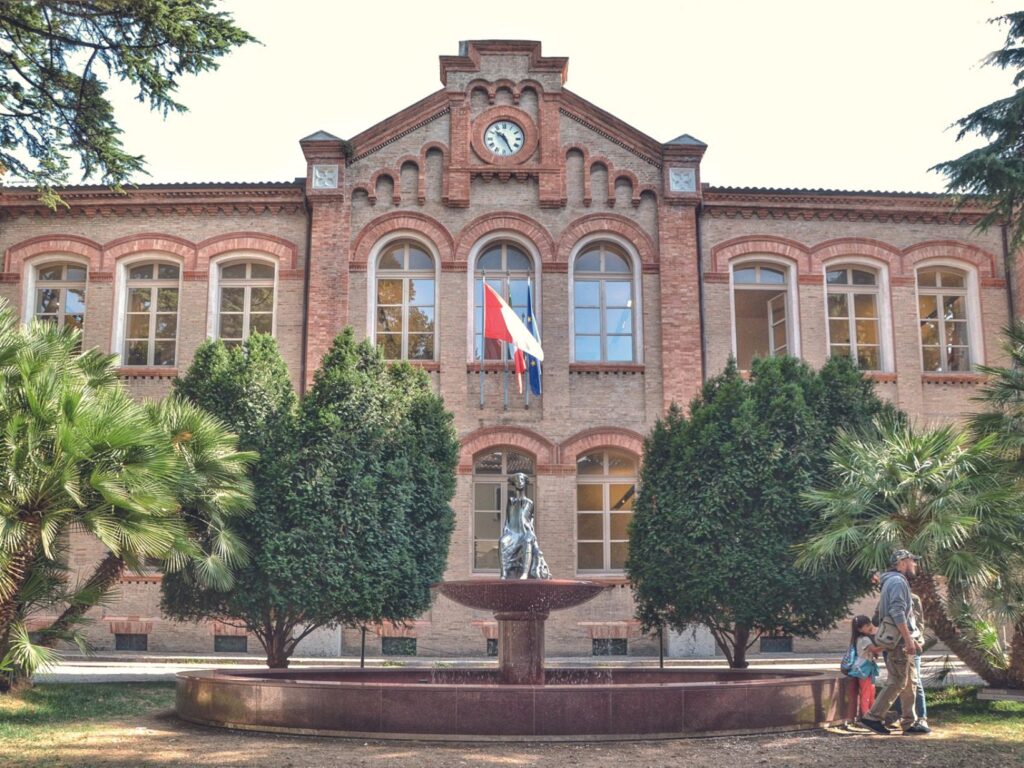
In keeping with the wider Fano area, the Media Library has placed particular emphasis on children and parents, creating spaces designed to encourage an appreciation of books from the very first months of a child’s life – and even before that – with areas specifically equipped for new mothers.
The Memo is linked to a historically continuous legacy that can be physically experienced within its Archaeological Area, where visitors can admire the remains of the Augusteum, a Roman-era building dedicated to the worship of the emperor.
A wealth of
historical and artistic heritage
Places of cultural significance and the legacy of the Malatesti family
The history of Renaissance-era Fano was shaped under the patronage of the wealthy and powerful Malatesta family, of whom the city still bears very clear traces.
Among these is the Palazzo Malatestiano, the splendid residence of the ruling family. Passing through the palace’s atrium, which allows visitors to take in its architectural beauty from within, one enters the Civic Museum, spread over two floors.
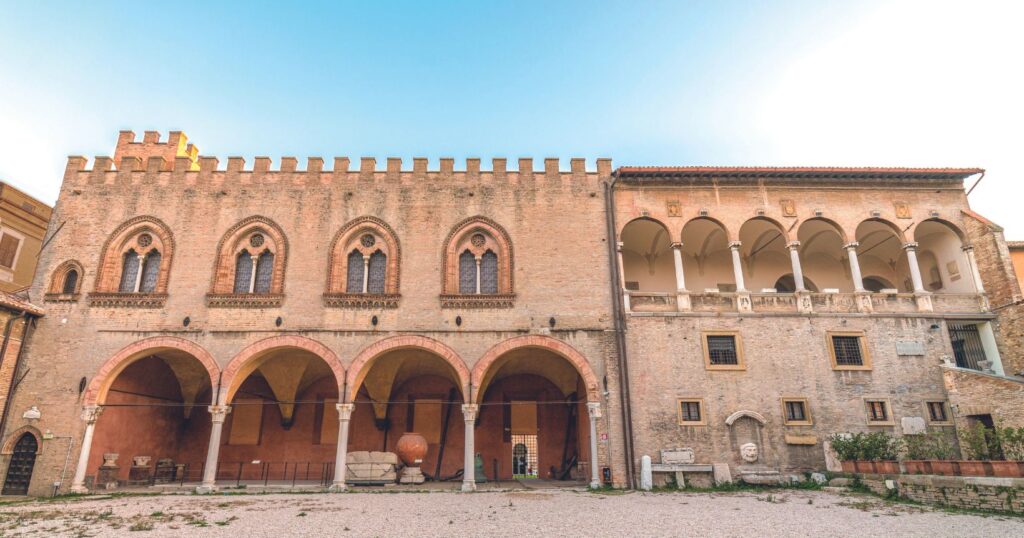
On the first floor is the Archaeological Section, with a truly rich collection: among amphorae recovered from the seabed and marvellous mosaics, the imposing statue of Emperor Claudius stands out; the people of Fano jokingly call it ‘el Maver’, a term in the local dialect referring to someone with little desire to work, given that the statue is missing its arms.
Climbing the stairs, you come face to face with the bronze statue of Fortuna, the city’s protector and symbol, a reproduction of which stands proudly on the Fontana della Fortuna in Piazza XX Settembre.
On the upper floor is the Art Gallery, which houses important paintings including Guido Reni’s *Annunciation* and Guercino’s *Guardian Angel*.
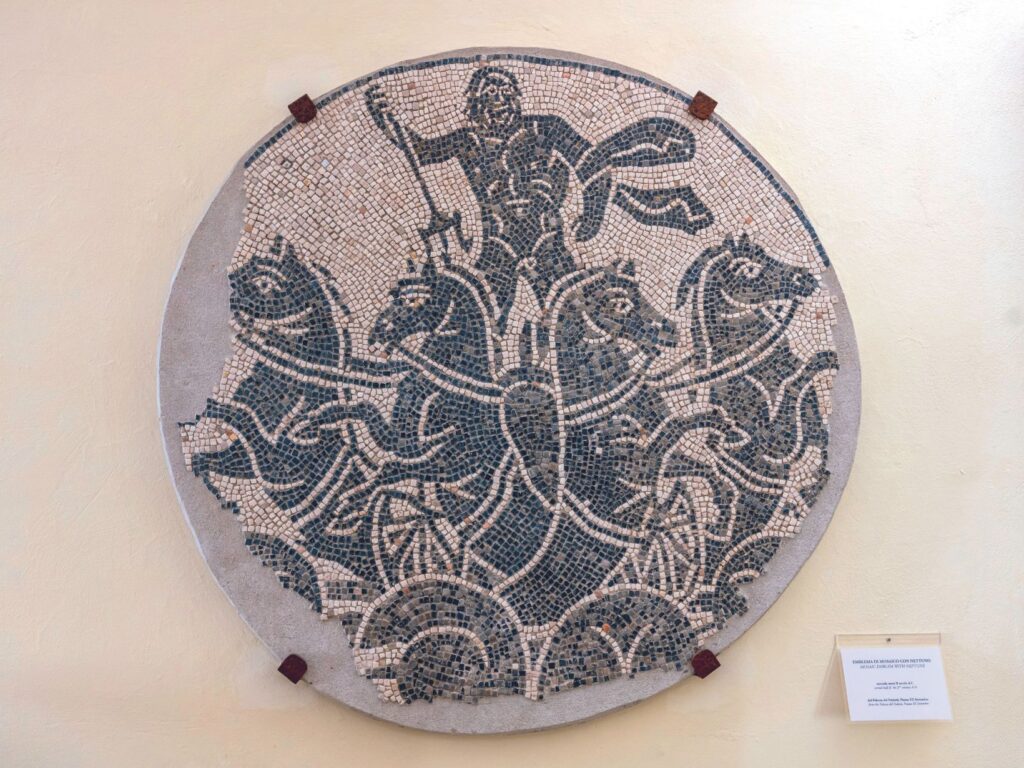
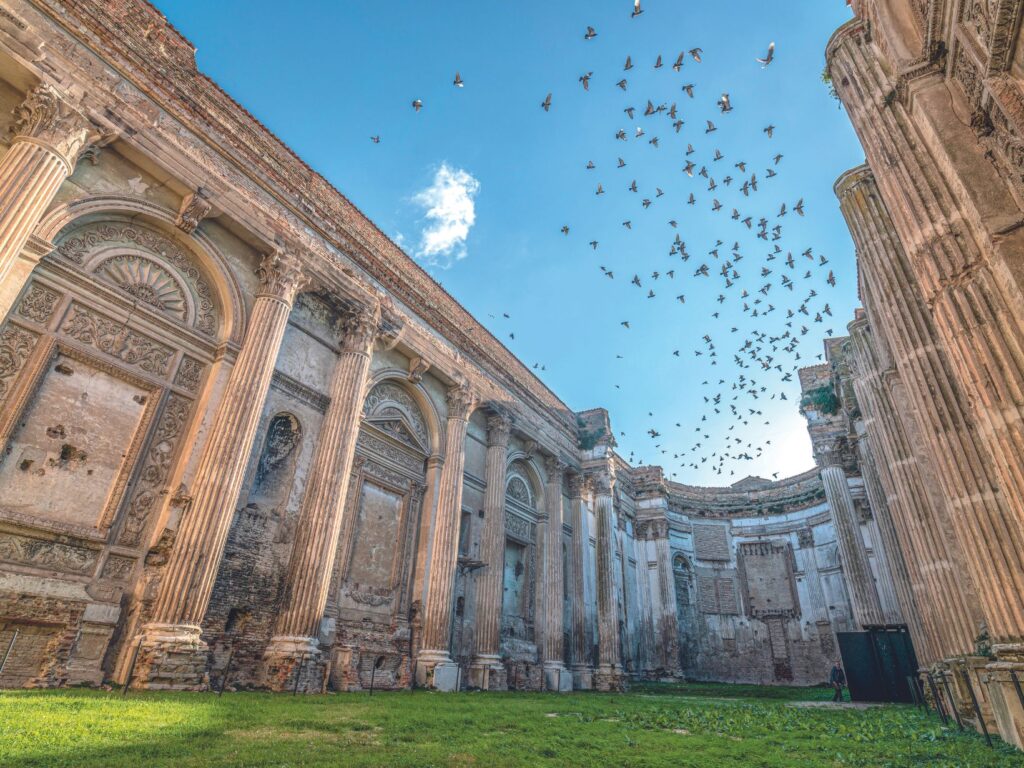
Here, too, we can see a well-preserved doublet that belonged to Pandolfo III, an important member of the Malatesta family, whose tomb – together with those of Paola Bianca Malatesti and Bonetto di Castelfranco, all richly carved – occupies the loggia leading into the former church of San Francesco.
The former church of San Francesco
The latter is a unique site in that the main structure remains standing without a roof, making it an open-air monument of incredible charm.
Another legacy of the Malatesta family is the fortress of the same name, which, with its imposing and austere quadrangular structure, served as a formidable shield for the town’s defence, forming part of the Malatesta walls, which lie further out than the ancient Augustan walls.
Today, the Rocca also serves as a venue for major events, which find a truly evocative setting in its inner square.
The Sangallo Bastion now serves the same purpose; this defensive bastion, built by Antonio da Sangallo the Younger at the south-eastern end of the city walls, facing the sea, is another such stronghold.
Another important venue for the city’s cultural life is the Teatro della Fortuna, built in the 19th century by Luigi Poletti to replace the old theatre of the same name, which had been erected by the great set designer and stage technician Giacomo Torelli.
Within its elegant surroundings, the theatre hosts a rich and varied programme of opera and drama, staged on the stage which is revealed once the splendid curtain – depicting Emperor Augustus’s entry into the ancient Fanum Fortunae – is raised.

Major events in Fano
The oldest carnival in Italy and many others
In Fano, Carnival is more than just a festival; it is a cultural event with which the town identifies. This is because Fano boasts the oldest Carnival in Italy, documented in a manuscript dated 1347 which is still preserved today.
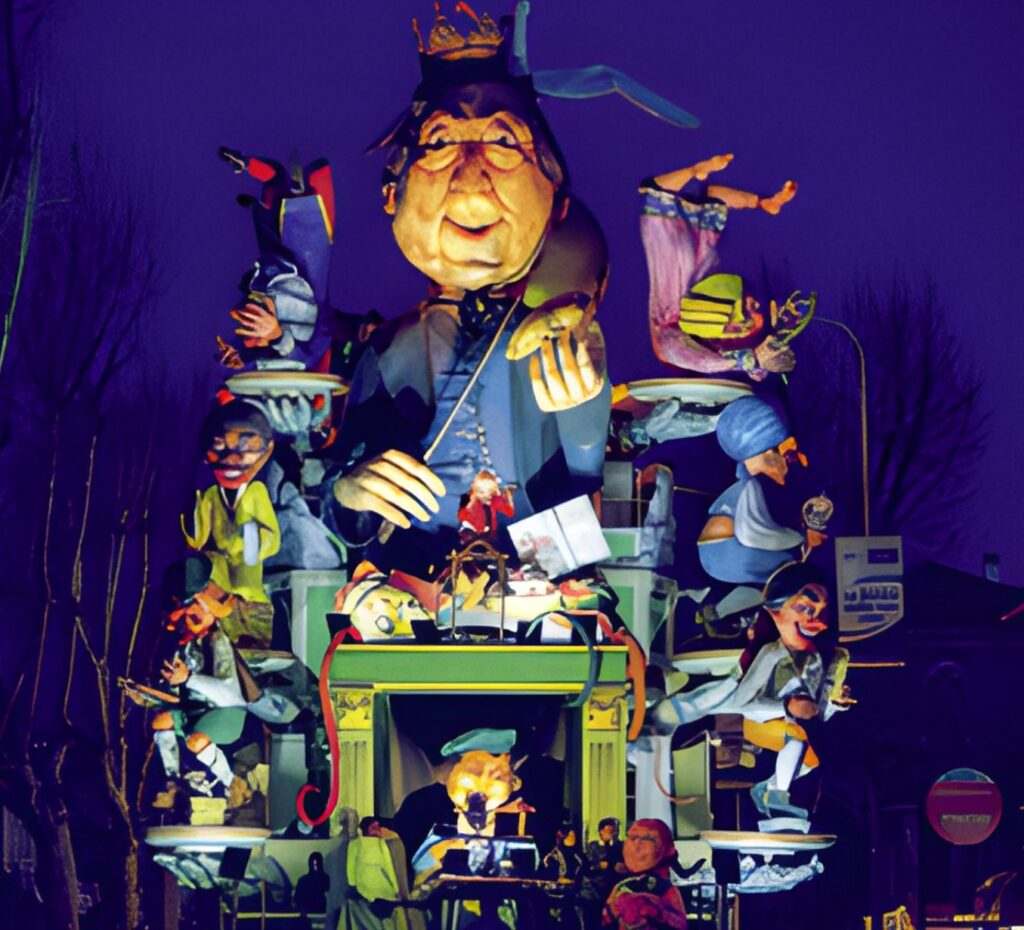
Since that time, the Carnival has been celebrated without fail; every year, a passionate organising committee takes charge of staging the event with the help of masters of the ancient art of papier-mâché, who create the gigantic mobile structures, each year featuring new subjects and themes. The floats parade through the streets of Fano, which are packed with awestruck crowds; masked children laugh and catch the shower of sweets thrown during the ‘Getto’: almost two hundred quintals of chocolates ‘sown’ from the tops of the floats – a gesture symbolically linked to the farmers’ sowing rituals as a wish for prosperity – making Fano’s Carnival the sweetest in Italy.
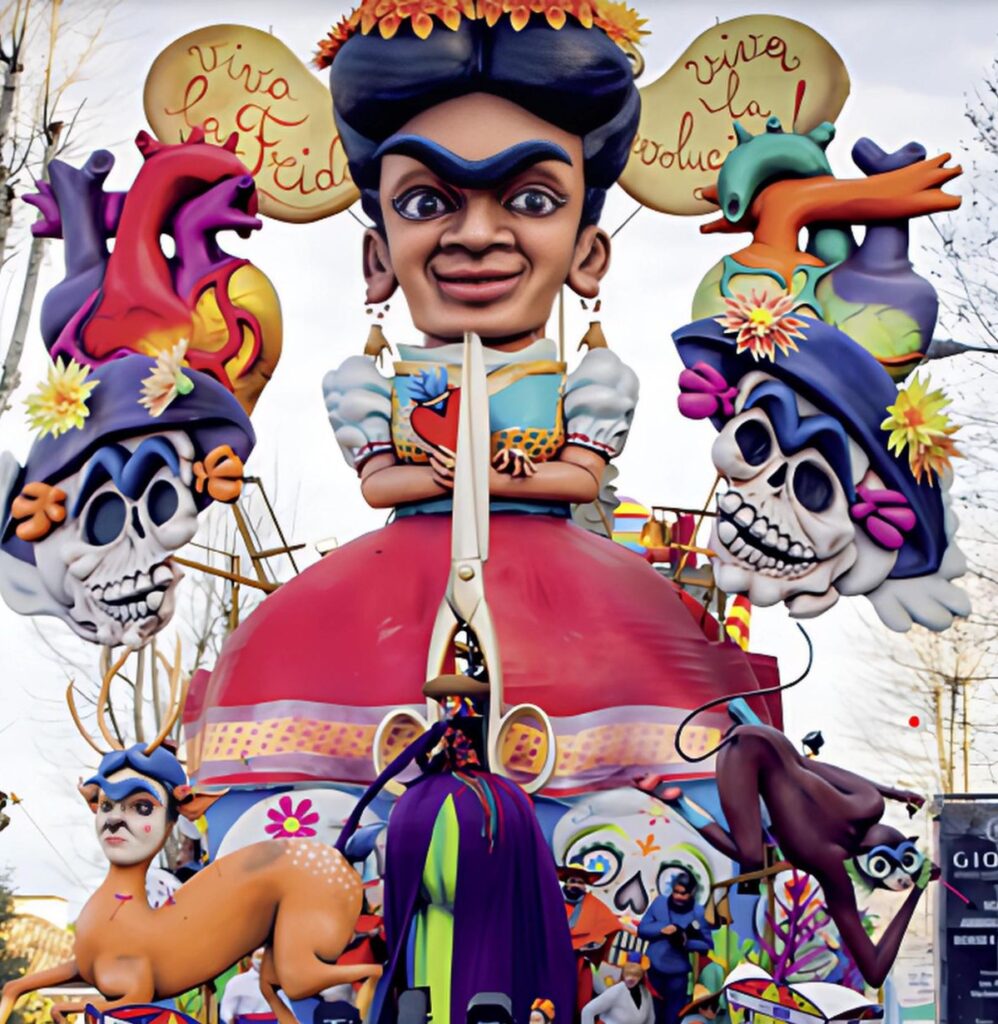
Among the procession of floats, the ‘Vulòn’ stands out – a Fano carnival icon reminiscent of the infamous Napoleonic town criers, which later became a symbol of the boastful braggart, and which ends its parade on Shrove Tuesday amidst the flames, taking winter away with it.
The parade is accompanied by a folk band called Musica Arabita (‘angry’ in the local dialect), which plays the most bizarre instruments, such as cowbells, coffee pots, umbrellas and whatever else can be improvised.
Fano offers many other outstanding events: at the Fano Jazz By The Sea Festival, internationally renowned artists enchant audiences with their blue notes; the Passaggi Festival, dedicated to non-fiction…
Fano becomes a hub where cultural events follow one another in the spirit of enrichment and exchange; finally, in July, the Fano dei Cesari takes place, during which, for a whole week, the town re-enacts the splendour of ancient Rome with costumed performances, chariot races and much more.
Brodetto and Moretta
The culinary traditions of the seaside come to the table
The traditional dishes of Fano’s cuisine have found their way onto dining tables in homes and restaurants via long journeys straight from the fishermen’s boats. Indeed, Fano’s close connection with fishing is most evident in its cuisine, more so than anywhere else.
Every good sailor had to be a cook as well, able to make do during the long days spent at sea. The traditional dish with which Fano is most closely associated is precisely that Brodetto, with which the fishermen would refresh themselves after the rigours of their work. This ‘humble’ fish soup, which differs from other varieties common in the Marche region due to the use of tinned fish and vinegar, has over time become a sought-after dish, taking centre stage at the annual International Festival of Brodetto and Fish Soups, an event aimed at promoting the fishing industry as a whole.
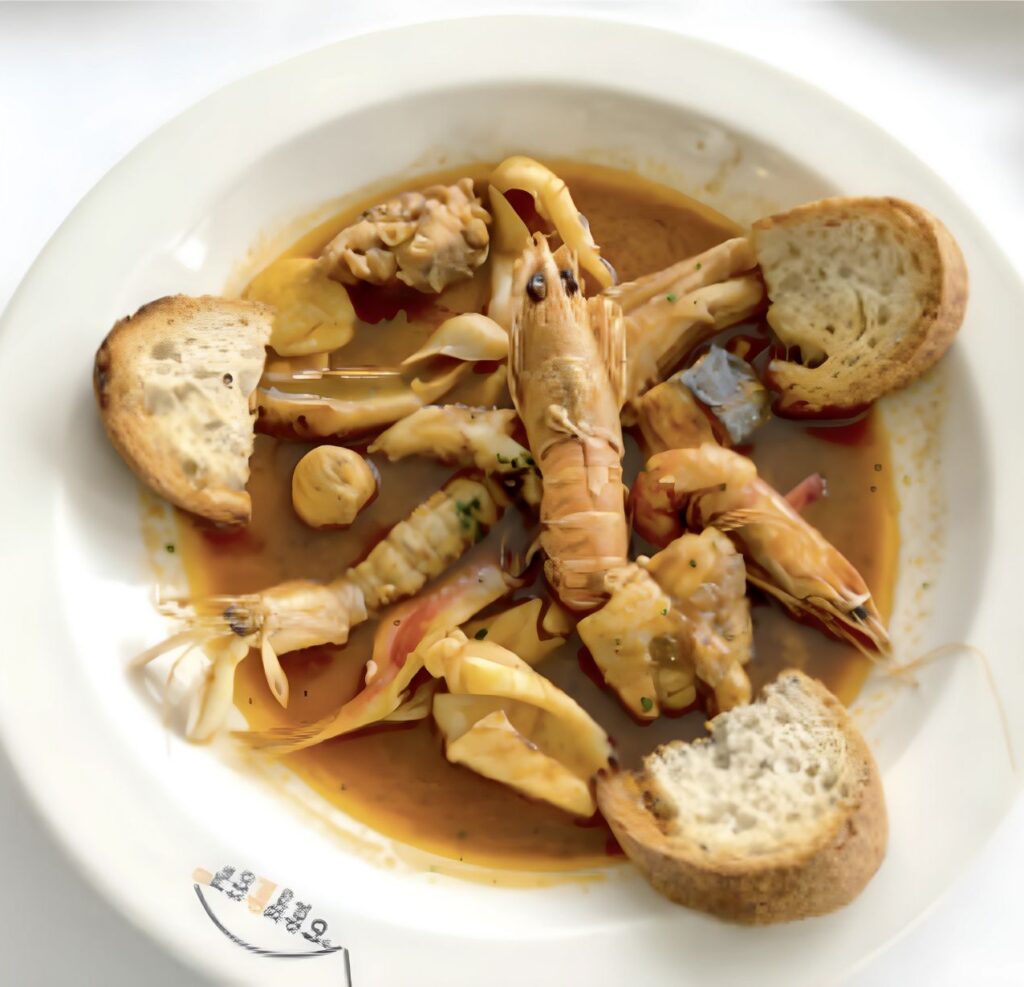
The seafaring tradition also gave rise to PesceAzzurro, a restaurant that later became a chain, whose origins lie in the spirit of conviviality with which the fishermen used to share their catch with the families of Fano. As soon as the nets were hauled in, the catch – from sardoncini scottadito to clams ‘à la pureta’, from Chef Marco Vegliò’s Brodetto alla fanese, grilled blue fish cooked on the ‘fugon’, were prepared and enjoyed whilst still carrying the taste of the sea.
La Moretta
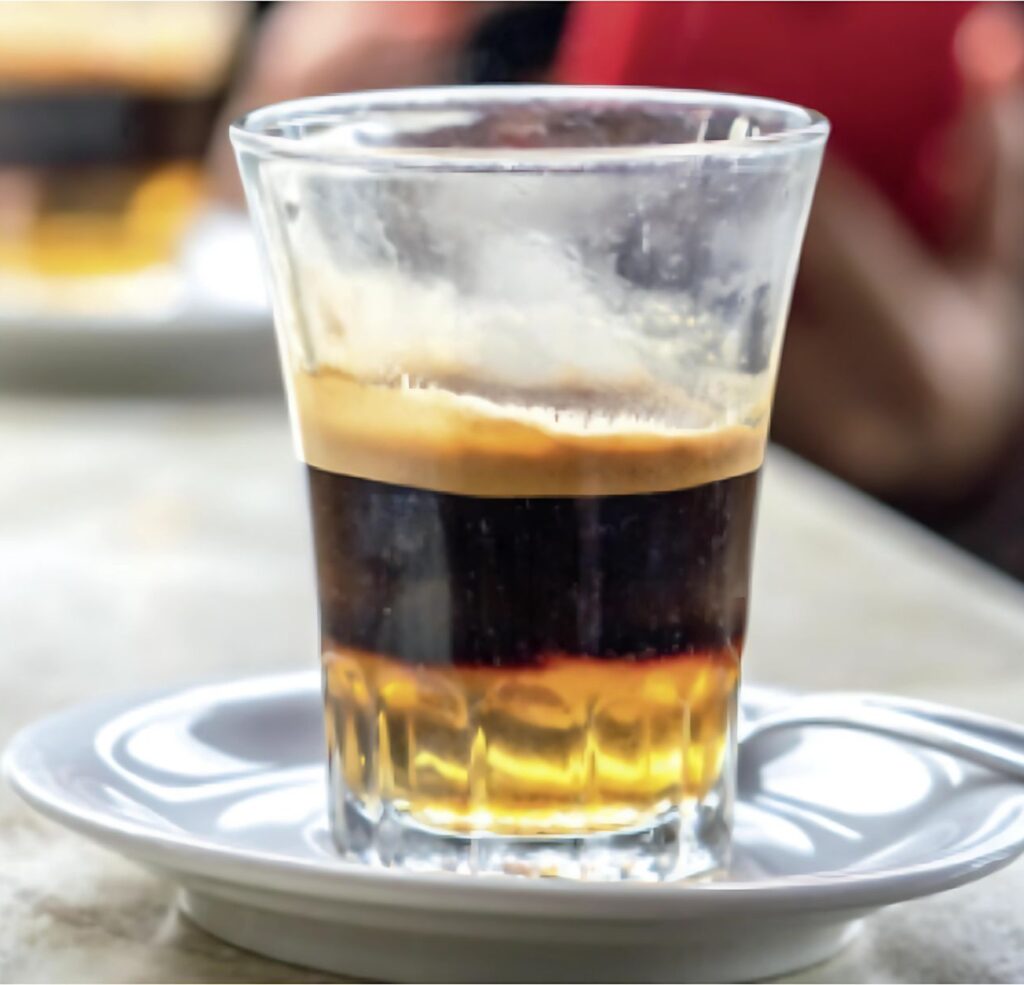
This restaurant was thus established by a fishermen’s co-operative; it recreates the festive atmosphere of those days, offering the chance to enjoy high-quality fresh fish at reasonable prices. After such a hearty meal, the fishermen needed something to round off their meal and, above all, to fortify them for the long, sleepless nights spent surveying the seabed.
From this, and from the need to waste not a single drop from the bottom of the bottle, came what is now known as the Moretta: a coffee laced with a blend of aniseed-based liqueur, rum and brandy. The result is inviting even to the eye, with three layers of liqueur, coffee and cream forming a tricolour that hints at a sweet yet strong flavour. Sipping it with your eyes closed, you can imagine the rippling sea shaking the keels of the ships where it was first created.
The city’s food and wine offering is characterised not only by seafood, but also by produce from the land, such as Bianchello del Metauro and Cartoceto PDO olive oil, which come from the magnificent Metauro valley, to which Fano is closely linked as its natural outlet to the sea.

Discover the beauty of Fano
The Beauty Trail comes to life
Exploring the beating heart of the Marche region has never been easier. Criluma Viaggi is proud to bring to life Confcommercio Marche Nord’s ‘Itinerary of Beauty’ project, transforming a guide of excellence into real-life itineraries, ready for you to experience.
Romantic weekends, days spent immersed in nature or cultural tours: we’ve created itineraries to suit all tastes and time commitments. The Criluma experience is the added value that guarantees you first-class treatment, comprising ongoing support, personalised attention and immediate responses.