
6 reasons to visit
San Lorenzo in Campo
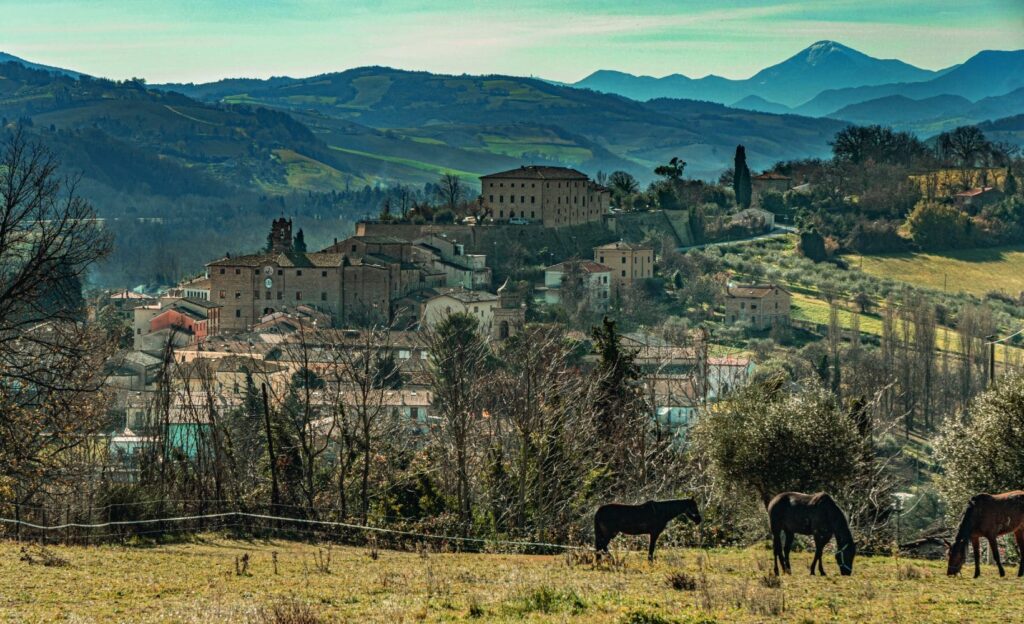
Arriving in San Lorenzo in Campo means finding yourself immersed in an urban setting of rare harmony. With every step, the excitement builds, revealing a village that welcomes visitors with an architectural elegance capable of transforming the landscape into an unforgettable sensory experience.
The route is lined with a characteristic colonnade that runs alongside the main road, leading all the way to the Fontana della Pieve. This historic crossroads, a focal point of town life, is situated directly opposite the Chiesa della Pieve, a church which houses precious and priceless works of art.
From the Pieve Church, a view opens up that catches the eye. The road leads the observer towards Palazzo Della Rovere, the village’s monumental focal point. The entrance staircase, which narrows elegantly towards the grand arch, creates a visual tension that irresistibly invites one to move forward.
Palazzo Della Rovere serves as the gateway to the beating heart of the historic centre. The central core is still protected by high, sloping walls, which have been preserved in perfect condition despite the passing of the centuries, bearing witness to the strength and prestige of this ancient ducal territory.
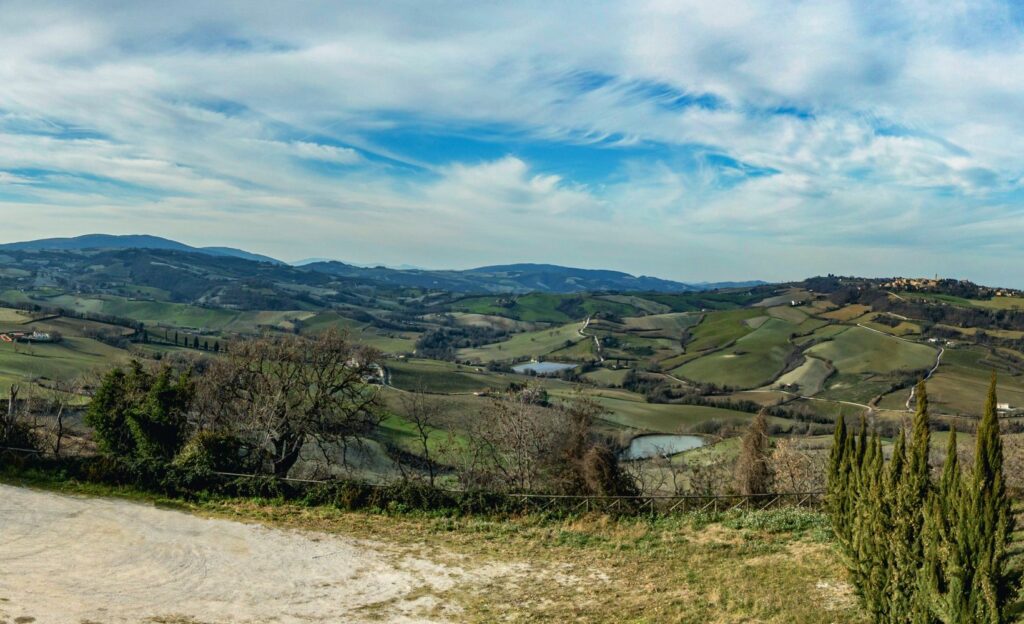
As you stroll through the streets of the town centre, every corner offers breathtaking views of the Marche countryside. San Lorenzo in Campo enjoys a privileged location, situated exactly halfway between the peaks of the Apennines and the Adriatic coast, with hills sloping gently as far as the eye can see.
The village’s stunning setting is merely a foretaste of the wonders that await visitors. A place where Renaissance architecture and the natural landscape blend into a single, harmonious promise of beauty, making San Lorenzo an essential stop on the itinerary.

Discover the charms of San Lorenzo in Campo
The Beauty Trail comes to life
Exploring the beating heart of the Marche region has never been easier with Criluma Viaggi!
Romantic weekends, days spent immersed in nature or cultural tours: we’ve put together itineraries to suit all tastes and time commitments.
A book about stone and art
The Benedictine Abbey immerses us in a thousand-year history of saints and ancient civilisations
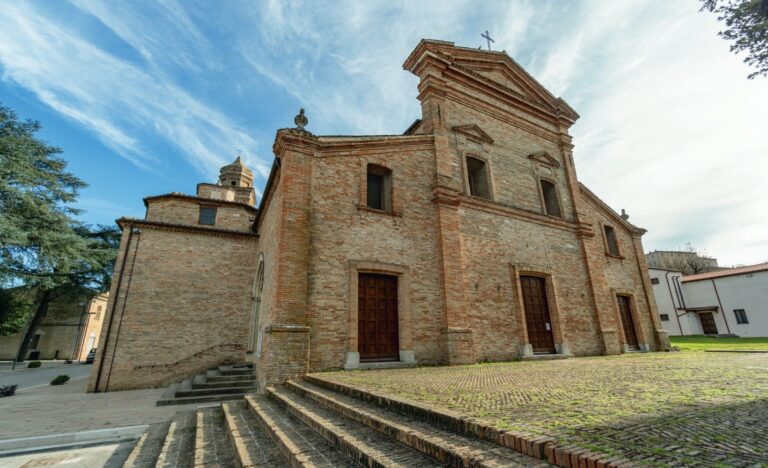
Blending seamlessly into the townscape whilst at the same time towering in all its majesty, the Benedictine Abbey of San Lorenzo in Campo is one of the finest examples of a Romanesque-Gothic church in the Marche region.
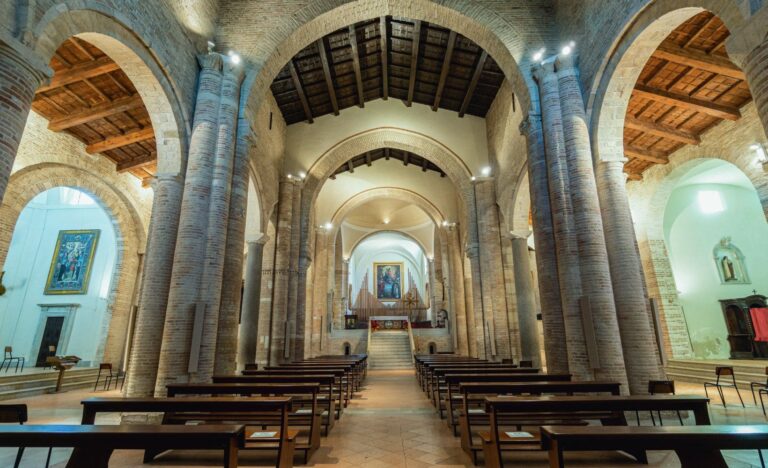
With its interior comprising three naves, the first thing that strikes the eye are the enormous columns, as mighty as tree trunks, which rise up and join to form round arches.
One cannot help but be awestruck by the combination of balance and solemnity they convey. The stone, like an enormous book, bears the marks of the Abbey’s history etched upon it.
Much of the material originally used in its construction came from the Roman town of Suasa.
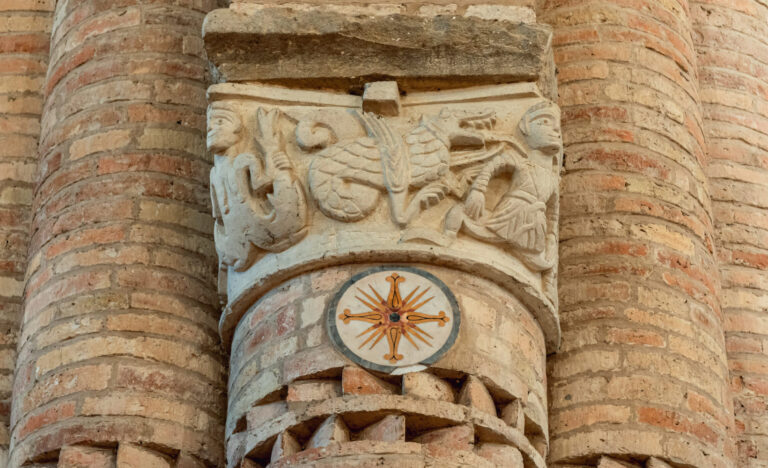
This is evidenced by the capitals decorated with plant motifs, figures of animals or mythological creatures. The attentive observer will be able to make out the ancient Roman frieze set above a column, depicting an eagle and a shell, whilst even the most inattentive will notice the four columns that differ from the others in colour and material: their origins date back as far as the Egyptian kingdom.
There are also numerous fine paintings, notably the large altarpiece by Rondolino, which depicts the village of San Lorenzo in the background. And it is precisely this raised altar that hints at the Basilica’s secret.
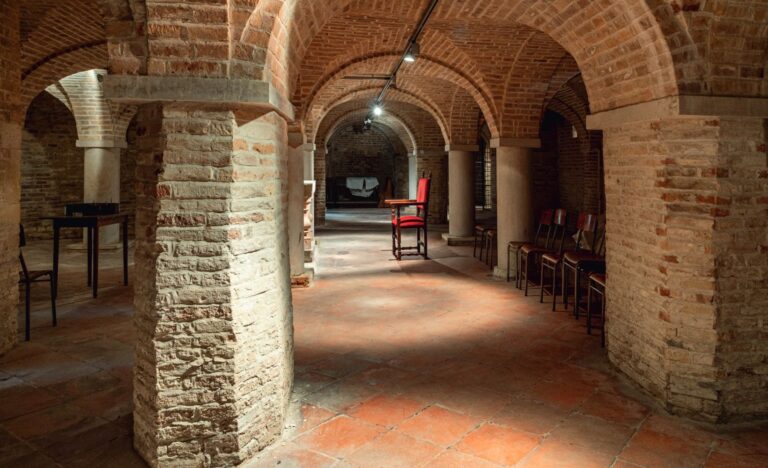
Beneath the chancel lies the ancient crypt, where the relics of Saint Demetrius, a Roman martyr from Thessalonica – now known as Thessaloniki – are kept; his remains were discovered here during restoration work in 1520.
This was a discovery of exceptional historical importance, which led, amongst other things, to the local painter Pietro Paolo Agabiti being commissioned to create the panel depicting the Madonna Enthroned with the Child, Saint Lawrence and Saint Demetrius.
One detail catches our eye: the broken arch in the background, which appears to symbolise the two different Churches – the Orthodox and the Catholic – united by the gesture of Jesus.
This bond has become a reality, as demonstrated by San Lorenzo’s excellent relationship with the Orthodox community, to which part of the relics of Saint Demetrius have been returned.
The painting is housed in the antiquarium adjoining the church, which contains numerous valuable artefacts, amongst which a magnificently inlaid chalice stands out – a gift from Giuliano Della Rovere, the future Pope Julius II.
The Mario Tiberini Theatre
The refinement and splendour of a temple of opera
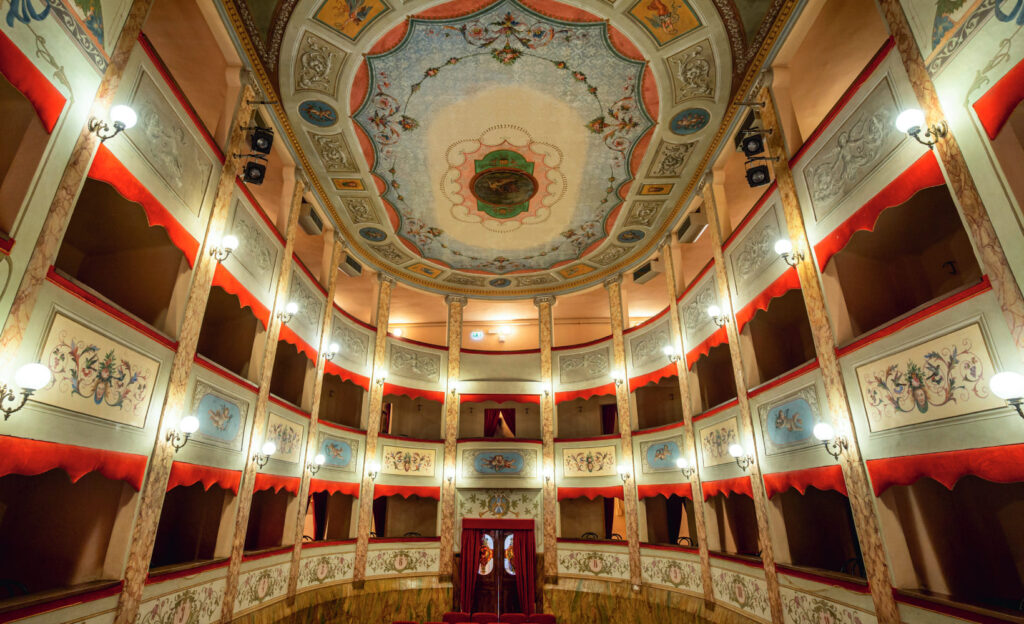
The elegance of the Teatro di San Lorenzo in Campo is more than just an architectural achievement; it is a destiny ingrained in its history.
This magnificent gem was, in fact, built on the piano nobile of the Palazzo Della Rovere, specifically in the very place where members of the powerful family used to hold their balls.
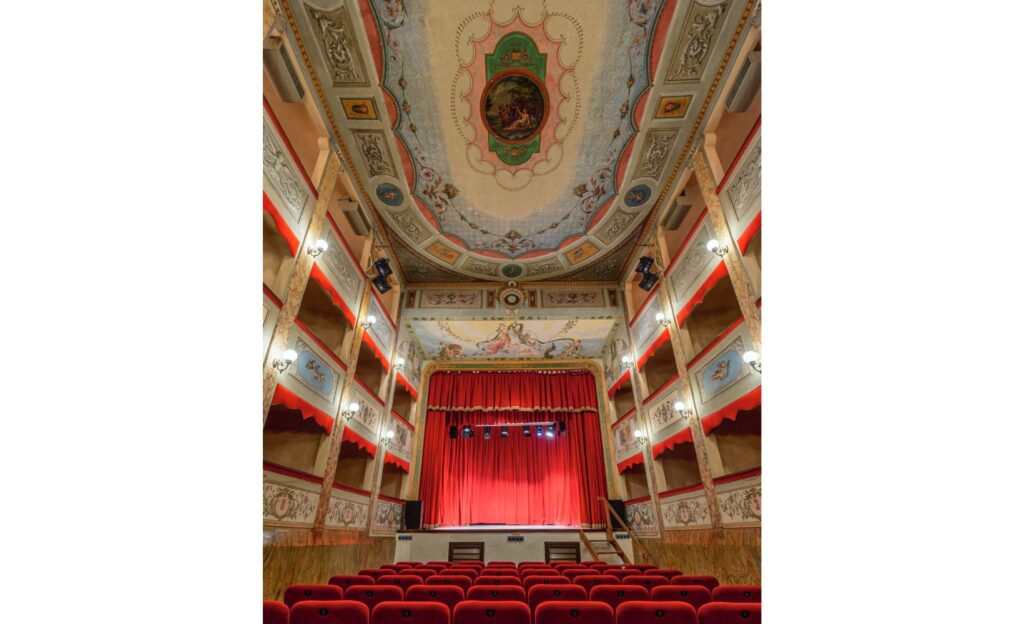
The echoes of those refined Renaissance parties seem to have survived to this day, judging by the beauty of the interior. The theatre, originally a wooden, dismantlable structure ‘in the French style’, later extensively remodelled ‘in the Italian style’, comprises, in addition to the stalls, two tiers of boxes surmounted by a gallery.
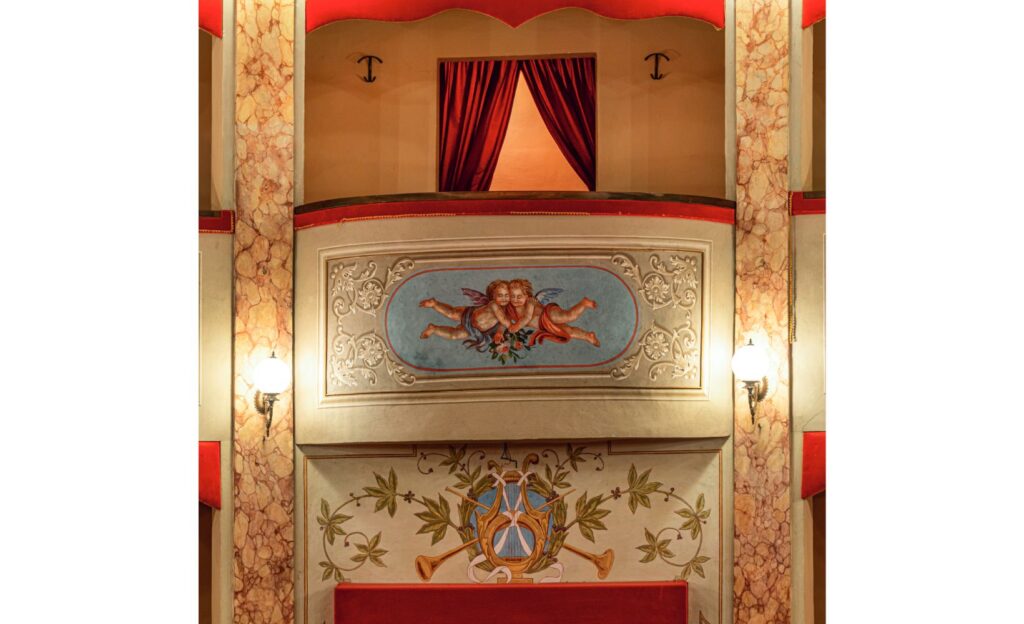
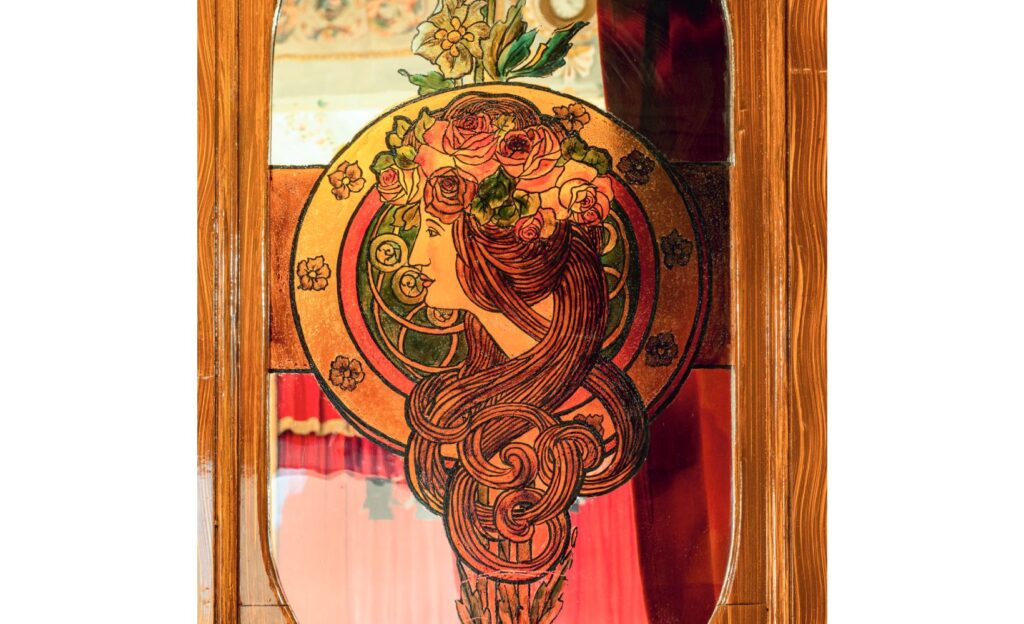
What makes this space so special are, above all, the Art Nouveau decorations that fill the hall, beginning with the stained-glass panels in the entrance door—depicting two enchanting young women’s faces—and continuing across all the walls, right up to the marvellous ceiling.
We are surrounded by floral motifs, scrolls, scrollwork, little angels and mythological figures – evocations of an idyllic, dreamlike natural world painted in soft colours that are a delight to the eye.
Following his death, the theatre was named after Mario Tiberini, the great tenor born in San Lorenzo in Campo in 1826.
Highly acclaimed by his contemporaries, Tiberini performed in theatres all over the world, always to great acclaim.
The theatre, completed in 1816 and initially known as the Teatro del Trionfo, has had a turbulent history marked by closures, restorations and various uses, but since the early 1980s it has been a permanent fixture in local cultural life, offering a rich programme of opera and drama.
To honour the most accomplished sopranos and tenors, as well as to promote emerging voices, the Tiberini International Opera Prize was established thirty years ago, an event that brings prestige to the whole of San Lorenzo in Campo with distinguished guests, whilst keeping alive the theatre’s glory and the memory of the great Mario Tiberini.
A time machine underground
The Archaeological Museum: from prehistory to the Romans and unexpected surprises
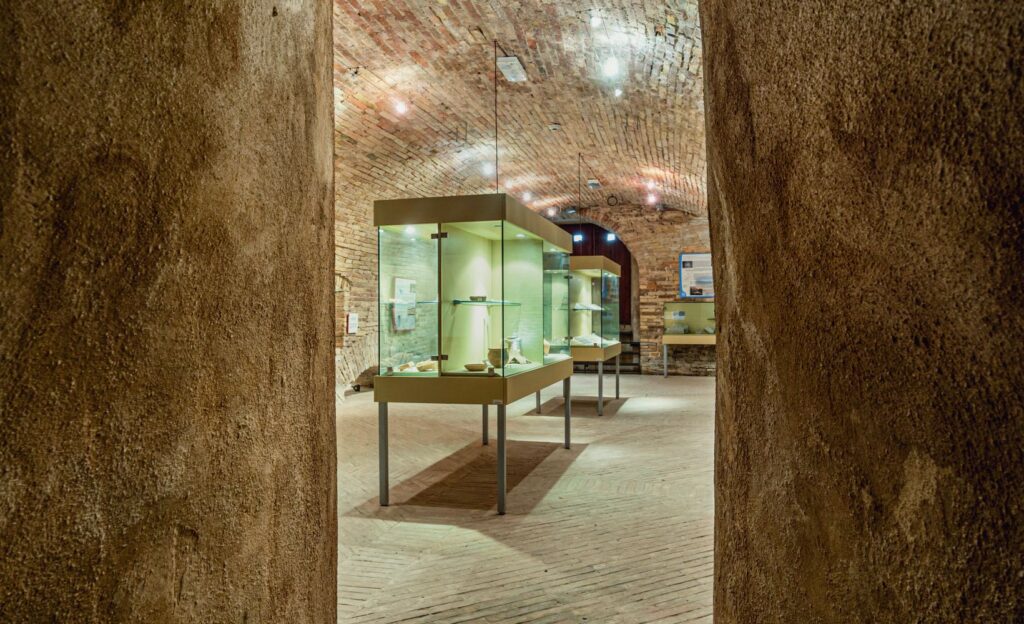
As we descend into the cellars of Palazzo Della Rovere, we embark on a journey which, after just a few steps, takes us back in time by millions of years.
The Archaeological Museum of the Region has been set up in the palace’s basement. This museum aims to trace the geographical, historical and cultural evolution of the Cesano Valley through five exhibition rooms spread over two floors, complete with informative panels rich in images.
Our journey begins in the most distant prehistory, when ammonites – ancient molluscs – inhabited the ocean where, millions of years later, land would emerge. A land where unexpected animals such as the rhinoceros and the bison would later roam; we can admire the enormous horned skull of the bison.
Moving on, the display cases begin to reveal the unmistakable signs of human presence.
We study this evolution through artefacts that trace humanity’s various achievements in working with materials: flint objects are followed by those made of copper, bronze and iron, including brooches, bracelets, fragments of weapons and numerous amphorae.

As we descend to the lower floor, we encounter a crucial phase in the history of San Lorenzo in Campo, namely the arrival of the Romans, which is attested at the beginning of the 3rd century BC.
Among the vast number of artefacts, the many votive statuettes depicting female figures – probably linked to domestic worship – are particularly fascinating.
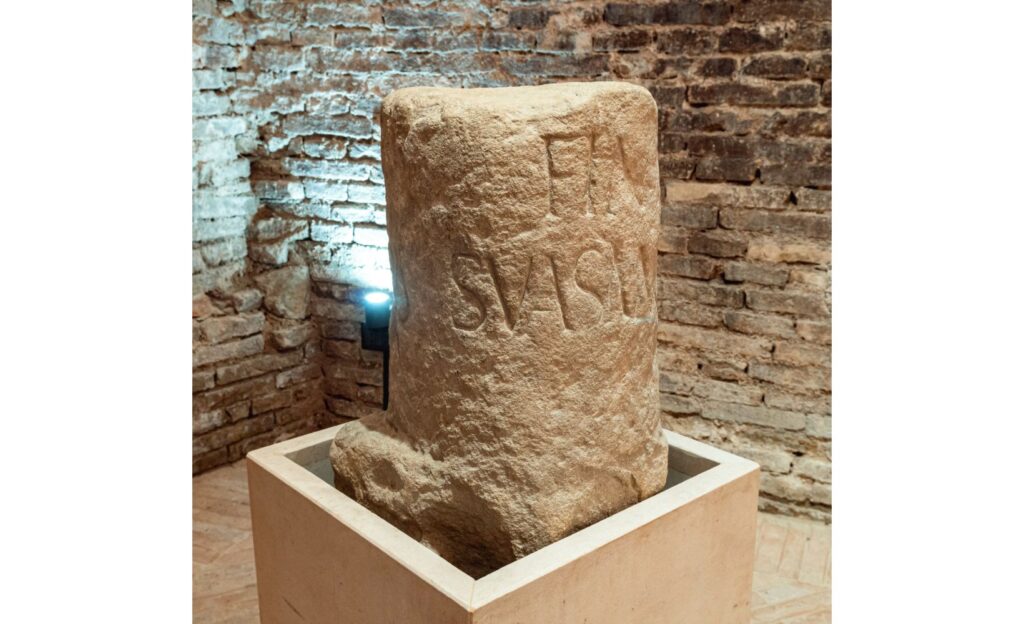
Also of great interest is the boundary stone that once marked the border between the territories of what were then Pesaro and Suasa, the great Roman city just a stone’s throw from San Lorenzo.
The final room marks a return to the museum’s very origins.
Here, in fact, is housed the collection curated by Gello Giorgi, a doctor and monk who formed the original core of this museum.
During his travels, Giorgi collected a diverse range of objects, varying in both era and origin.
Particularly striking are the artefacts the monk brought back with him after his time in Sierra Leone, where he served as a missionary for many years; these allow us to delve into African ethnology through some truly unique artefacts.

The pearls nestled amongst the hills
Breathtaking views and absolute tranquillity in the hamlets
Two small hamlets gravitate around San Lorenzo in Campo, solitary gems that shine with their own light.
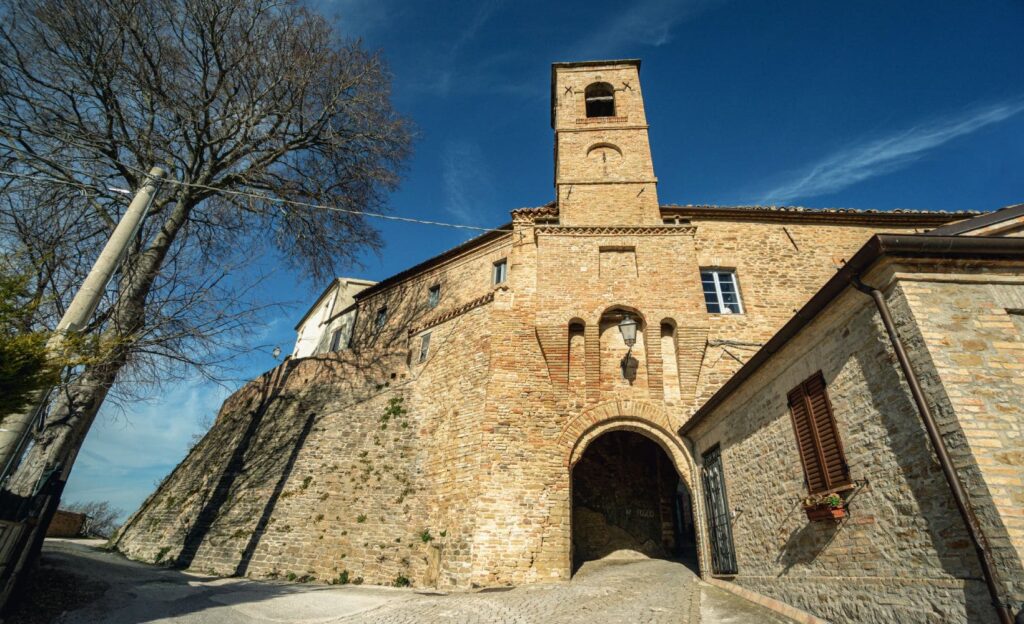
Accessible via roads that wind their way up and down the rolling hills, these small villages seem untouched by the passage of time; they rest serenely atop their hilltops and offer an unmissable opportunity to shake off the stresses of hectic life.
Here, peace and tranquillity have become etched into the great walls, which seem to want to protect and embrace us, allowing us to breathe slowly and enjoy the sublime landscape that unfolds around us.
This is exactly what we can do as we walk along the walled perimeter of Montalfoglio, a veritable gem clad in stone.
At every slight bend in the walls, new vistas open up; the horizon is shaped by the sinuous curves of the hills and the sudden rises of the mountains.
We enter Montalfoglio by passing through the double archway beneath the clock tower, which is reached by climbing a short ramp that has replaced the ancient drawbridge.
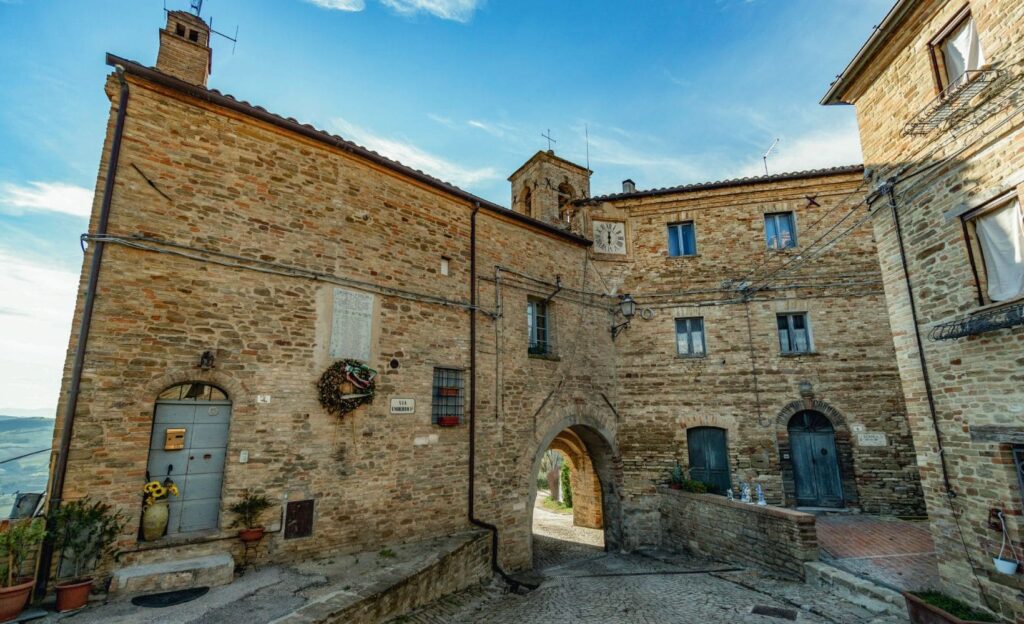

It’s a picture-postcard scene, but photographs can only partly convey the thrill of entering this place.
As we stroll, we savour the stillness; our thoughts drift away and our bodies relax.
The Pieve di San Martino, which surprises us amongst the small houses with its broad façade, is at once austere and motherly.
We are overcome by similar emotions when we move on to the other distinctive hamlet of San Lorenzo in Campo, namely San Vito sul Cesano.
Perched atop a hill overlooking the Cesano Valley, it is still surrounded by the ancient walls that defended it during the numerous battles that marked the various changes of hands it underwent in the Middle Ages.
Here we can find two religious buildings of great significance.
The Church of Saints Biagio and Esuperanzio is in a rich Baroque style and adorned with exquisite frescoes, whilst at the foot of the village stands the Old Monumental Parish Church, dating back to the year 1000 and of great historical interest.
The Chamber of Wonders of Marche Culture
Discovering ancient traditions through an unrivalled exhibition
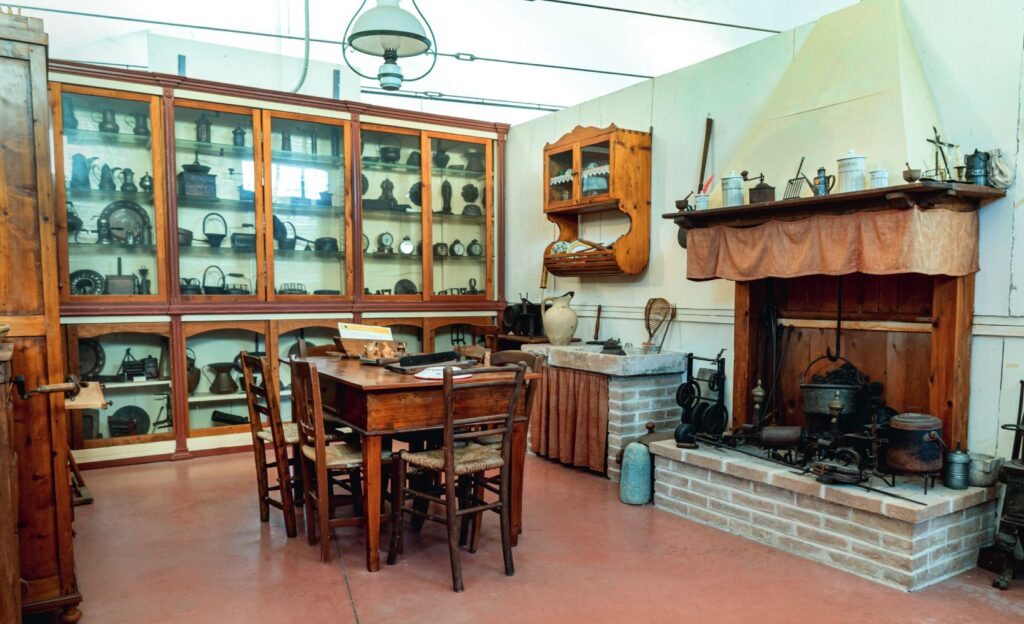
There is a place in San Lorenzo in Campo where the culture of the people of the Marche region is brought together and celebrated.
It is the Museo delle Terre Marchigiane, home to the Straccini Collection. The museum houses more than two thousand objects relating to the rural traditions of the Marche region, dating from the turn of the 19th and 20th centuries.
It is an unrivalled exhibition, brought to life by images and sounds, which offers a comprehensive insight into rural life – an era characterised by hard work, ingenuity and genuine community spirit.
The museum is organised into four themed areas. As we immerse ourselves in the ‘places of life’, we can feel the warmth of the domestic spaces in a sharecropper’s home and observe, for example, the kitchen with its lard-beater, graters, pasta strainers and sturdy sideboards.
The ‘meeting places’ bear witness to moments of gathering and social life. The reconstruction of a school classroom is almost moving, with its blackboard and wooden desks.
In the ‘old trades’ section, we see recreations of the workshops and workplaces of artisans, such as the ‘Sali e Tabacchi’ (Salt and Tobacco), which is overflowing with items for sale, including scales and small weighing machines.
We see a succession of rooms and tools belonging to the barber, the cobbler, the knife-grinder and others.
It feels as though we’ve been transported into an old black-and-white photograph at our grandparents’ house, but here everything is in colour and so skilfully arranged that it conveys a strong sense of life.
Finally, there are ‘the collections’ – a museum within a museum – featuring an extraordinary display of objects dating from the 16th to the 20th centuries, made of ceramics, iron and copper. The collection of majolica, in particular, is impressive.
True masterpieces from various specialist centres such as Fabriano, Fratte Rosa, Urbania and Pesaro are proudly on display.
Many objects, although originally created for practical purposes – such as oil cruets, sauce boats, bottle coasters and hot-water bottles – are elevated to the status of works of art thanks to the beauty of their forms and the delicacy of their decorations.
Countless other items are on display, ranging from the milkman’s bicycle to early models of typewriters, right up to the wheel of fortune used at local festivals, which stands out above the entrance.

Culinary delights
Traditional produce born of the generosity of the local environment

San Lorenzo in Campo, shaped by the succession of fields cultivated by man, is a fertile and bountiful land, yielding succulent gifts to be served at the table. Tradition and innovation come together in the production of its culinary and wine specialities.
Spelt is one of the most renowned crops of San Lorenzo in Campo. This cereal has a history as ancient as that of human civilisation: cultivated as far back as in Mesopotamia and Egypt, it later played a central role in Roman society, serving as sustenance and pay for the legions, as well as a food symbolising good fortune during ceremonies.
Today, spelt has returned to the limelight thanks to its high nutritional value and cultivation methods strictly adhering to organic standards.
Quality standards that reach the very highest levels here in San Lorenzo in Campo.
The ears of wheat that turn the hills golden yield a wide variety of products – a cornucopia united as much by their health benefits as by their delicious flavour: pearled and wholemeal spelt, puffed spelt and honeyed spelt, not to mention flour, pasta, biscuits, crispbreads and chocolate bars.
It is also the key ingredient in the spelt castagnolo, a traditional dessert from the Marche region and the star of the ‘Sagra del Castagnolo’ festival.
Another local speciality is also golden in colour: honey.
Sweet, thick, glossy and rich in nutrients, honey is synonymous with the region: wildflower honey, in particular, is the essence of what the specific flowers that colour the meadows and land of a place have to offer.
No two wildflower honeys are alike, and you can be sure that the honey from San Lorenzo in Campo is second to none.
This is borne out by the numerous awards won by ‘La Mieleria di San Lorenzo’, the area’s leading producer.
This company offers an incredible variety of honeys, each with its own distinctive characteristics.
As well as wildflower honey, you can choose from acacia honey, honeydew honey, sunflower honey, a plant that brightens up the fields of San Lorenzo in great numbers, lime blossom honey – very refreshing and perfect for herbal teas – coriander honey, with a citrusy flavour and a spicy aroma, rapeseed honey, ideal paired with cheese, and chestnut honey.

Discover the charms of San Lorenzo in Campo
The Beauty Trail comes to life
Exploring the beating heart of the Marche region has never been easier. Criluma Viaggi is proud to bring to life the ‘Itinerario della Bellezza’ project by Confcommercio Marche Nord, transforming a guide to excellence into real-life itineraries, ready for you to experience.
Romantic weekends, days spent immersed in nature or cultural tours: we’ve created itineraries to suit all tastes and time commitments. The Criluma experience is the added value that guarantees you first-class treatment, comprising continuous support, personalised attention and immediate responses.