Descrizione
The history of Renaissance Fano was shaped under the patronage of the wealthy and powerful Malatesta family, of whom the city still bears very clear traces. Among these is the Palazzo Malatestiano, the splendid residence of the ruling family. Passing through the palace’s atrium, which allows one to take in its architectural beauty from within, one enters the Civic Museum, spread over two levels.
On the first level is the Archaeological Section, with a rich collection: among amphorae recovered from the seabed and marvellous mosaics, the imposing statue of Emperor Claudius stands out; the people of Fano jokingly call it ‘el Maver’, a term in the local dialect referring to someone with little desire to work, as the statue is missing its arms.
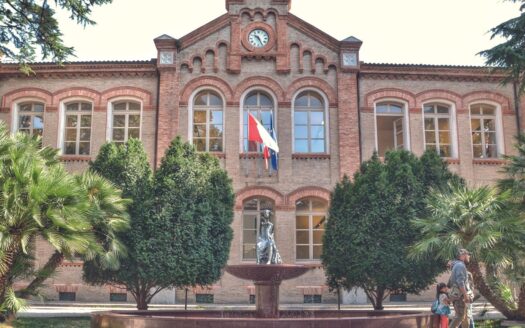
Climbing the stairs, you come face to face with the bronze statue of Fortuna, the city’s protector and symbol, a reproduction of which stands proudly on the Fontana della Fortuna in Piazza XX Settembre.
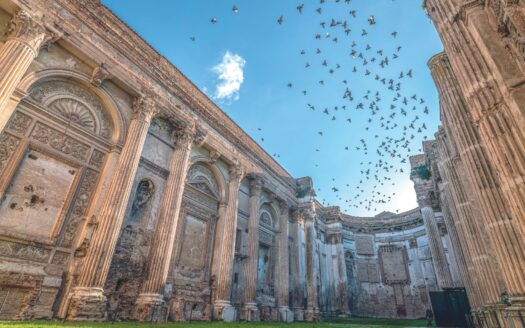
On the upper floor lies the Art Gallery, which houses important paintings including Guido Reni’s *Annunciation* and Guercino’s *Guardian Angel*. Here, too, we can find a well-preserved farsetto that belonged to Pandolfo III, an important Malatesta nobleman whose tomb—along with those of Paola Bianca Malatesti and Bonetto di Castelfranco, all richly carved—occupies the loggia leading to the former church of San Francesco.